
Last updated September 10, 2026
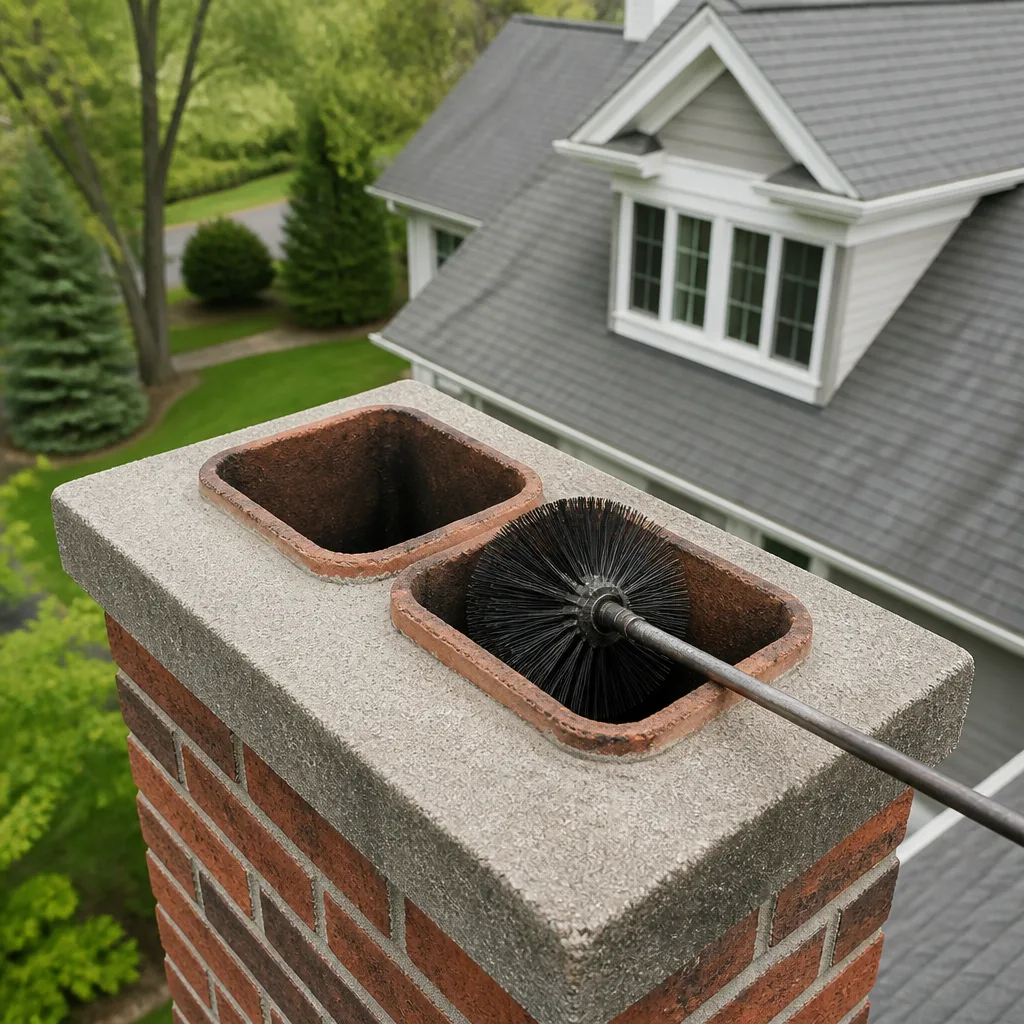
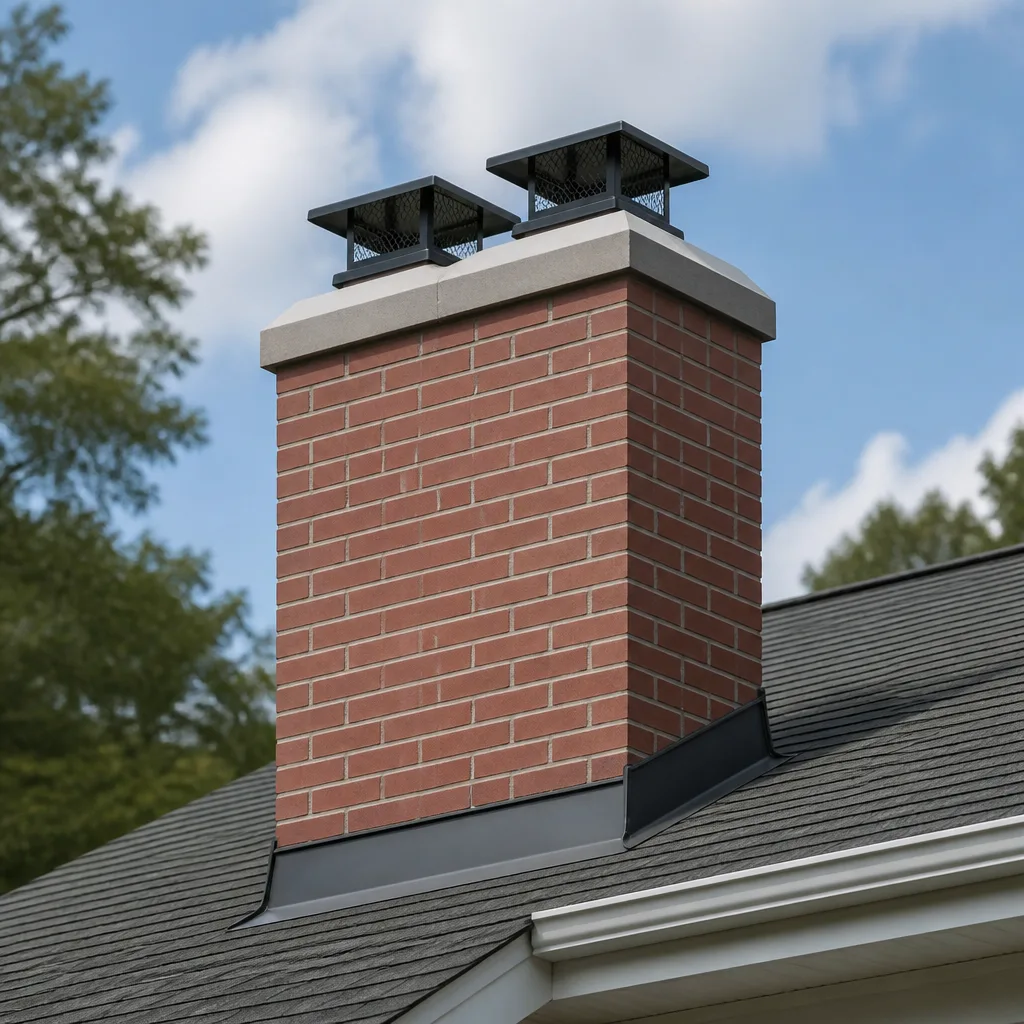
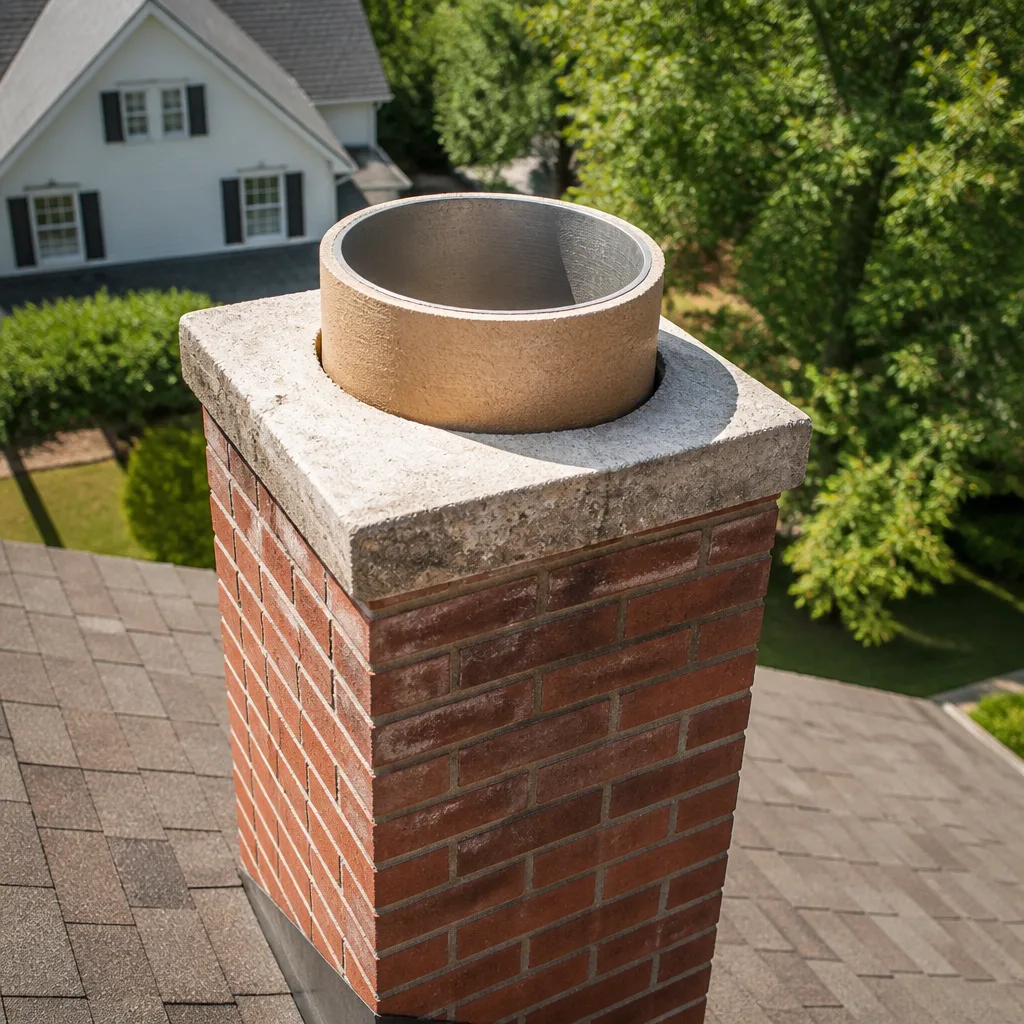
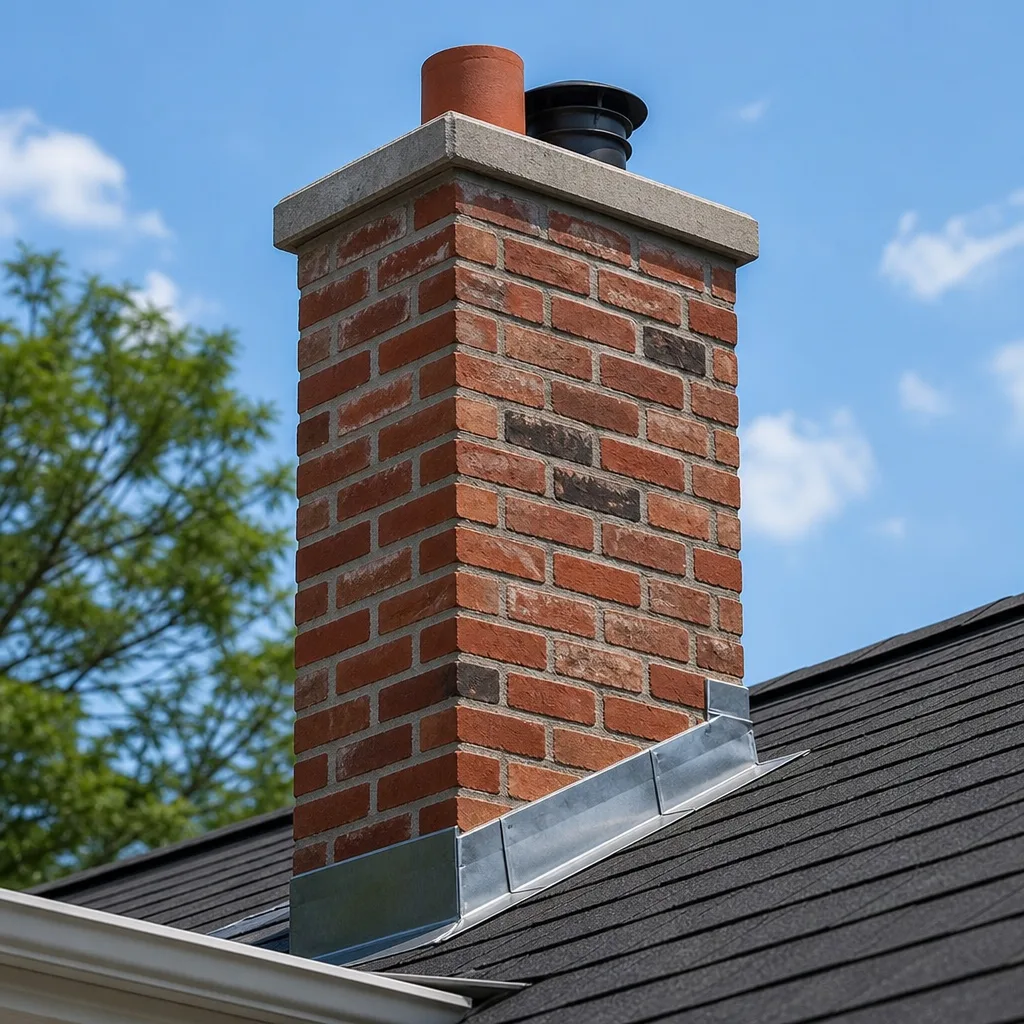
Level 1 sweep and inspection to the NFPA 211 annual standard - flue, crown, cap, and flashing checked and photographed
Chimney sweep logs do not sweep chimneys. They loosen some creosote - which then falls where a brush and vacuum still have to collect it.
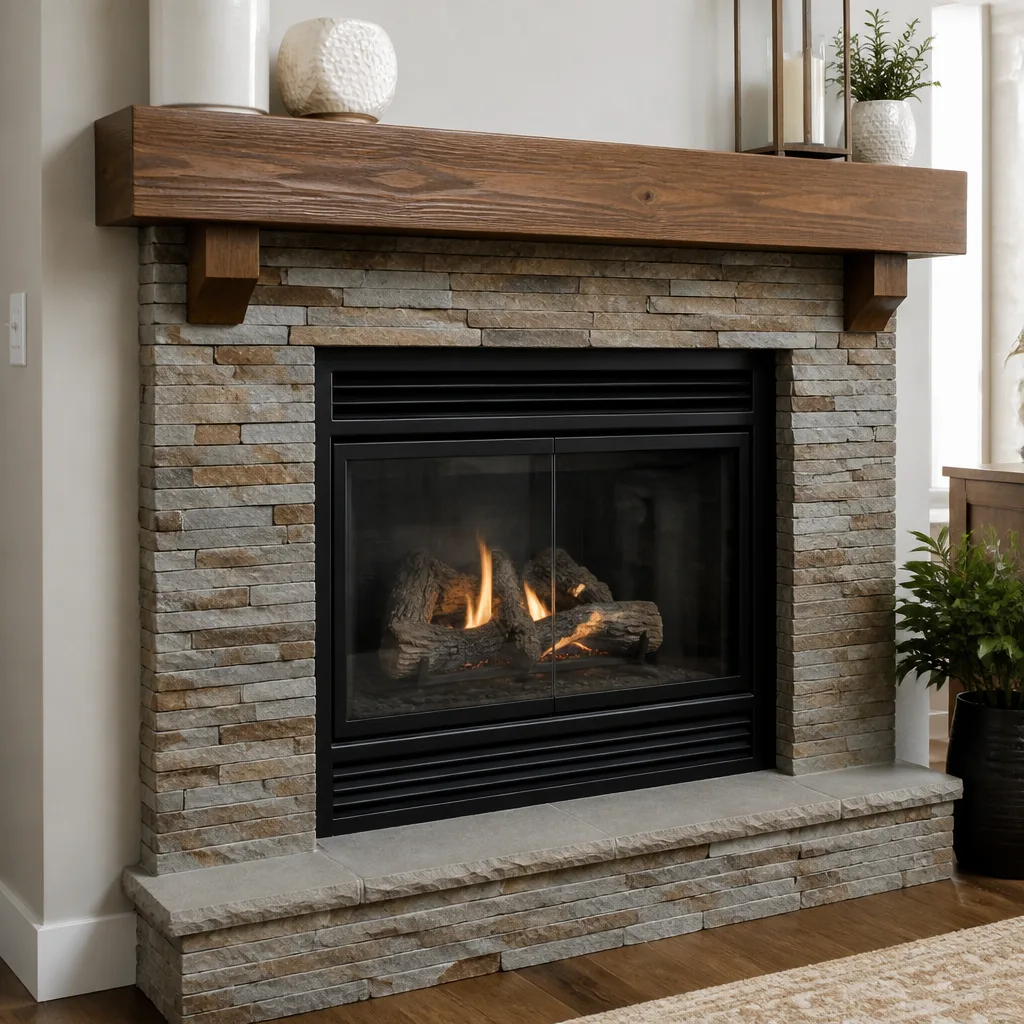
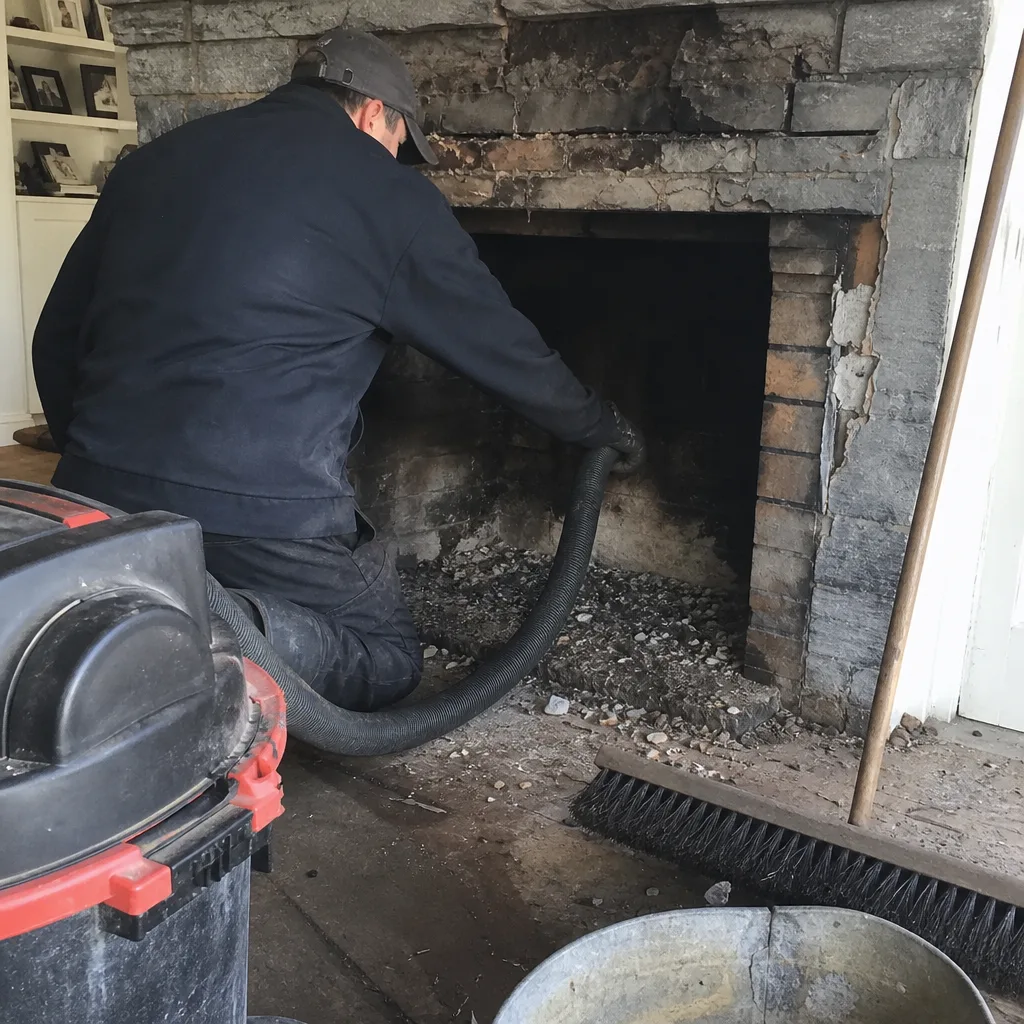 Before
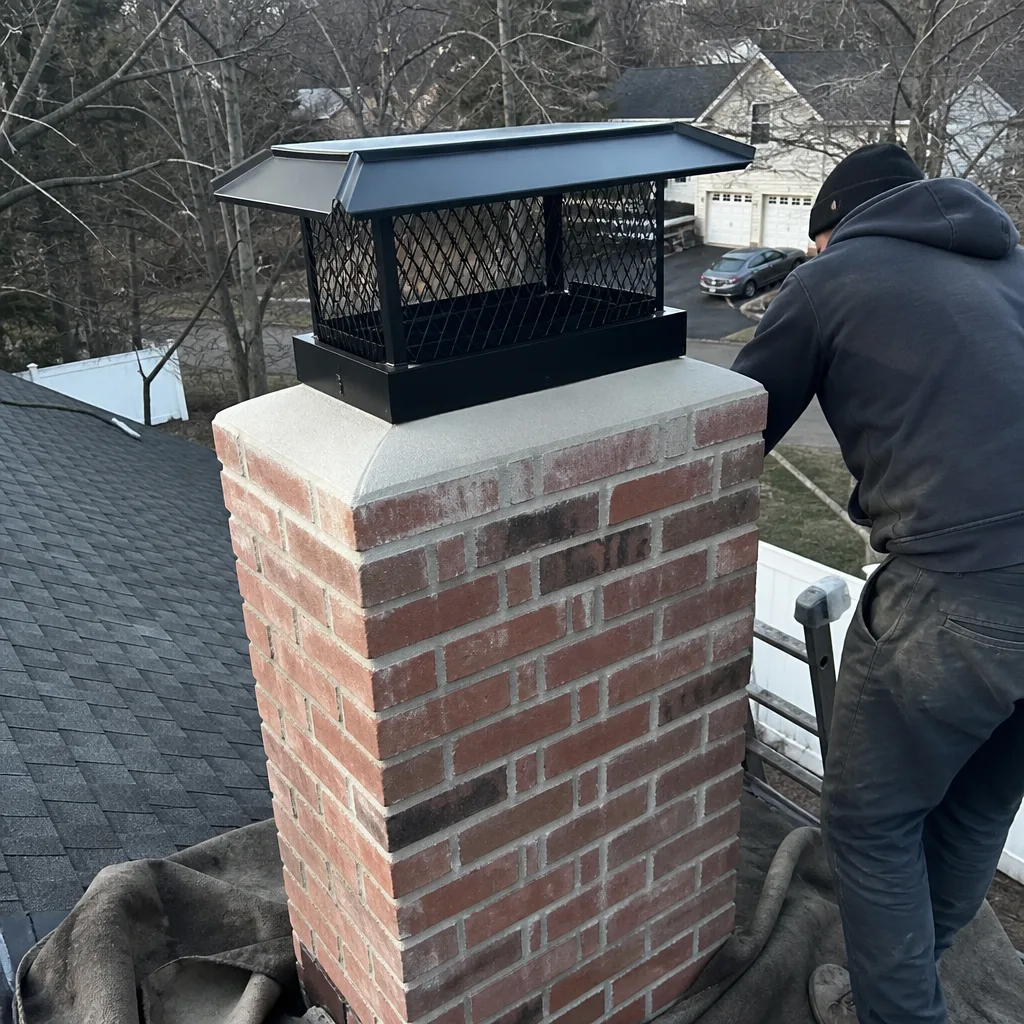 After
After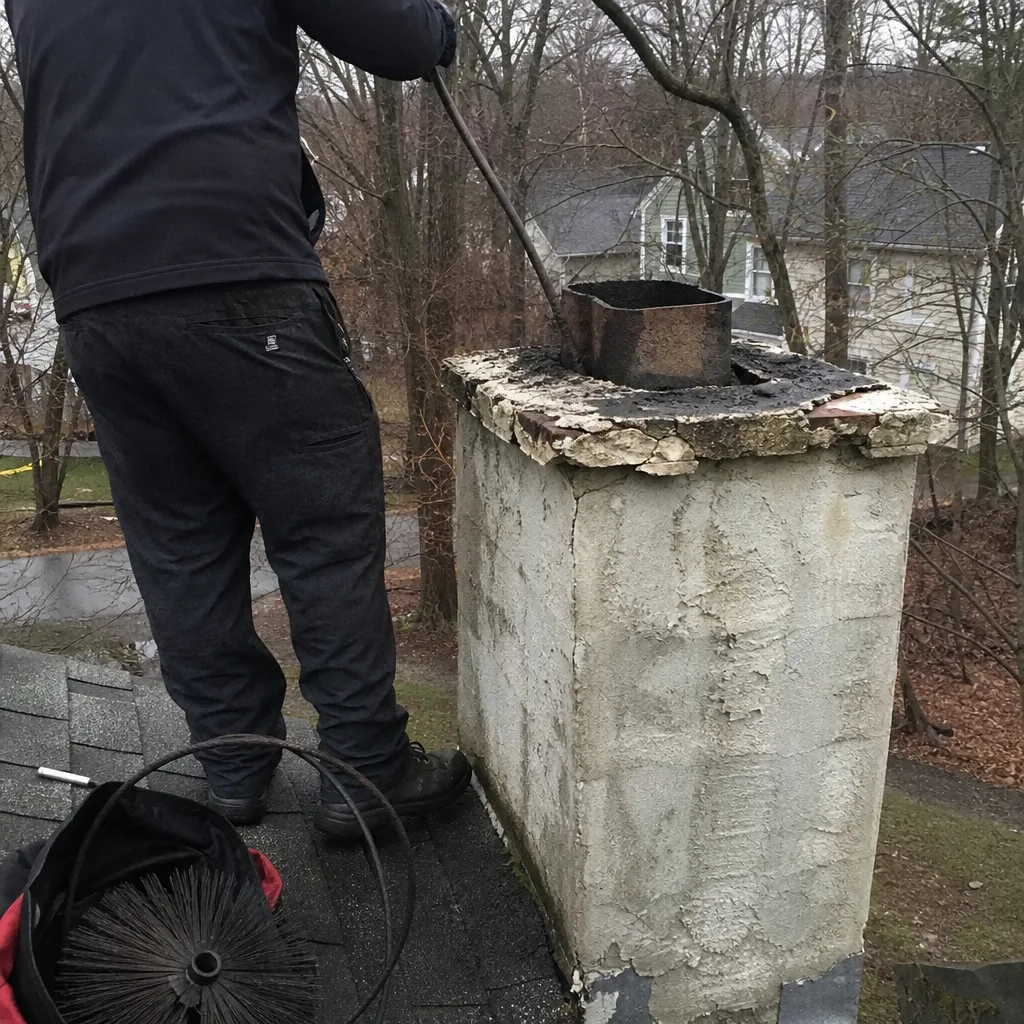 Before
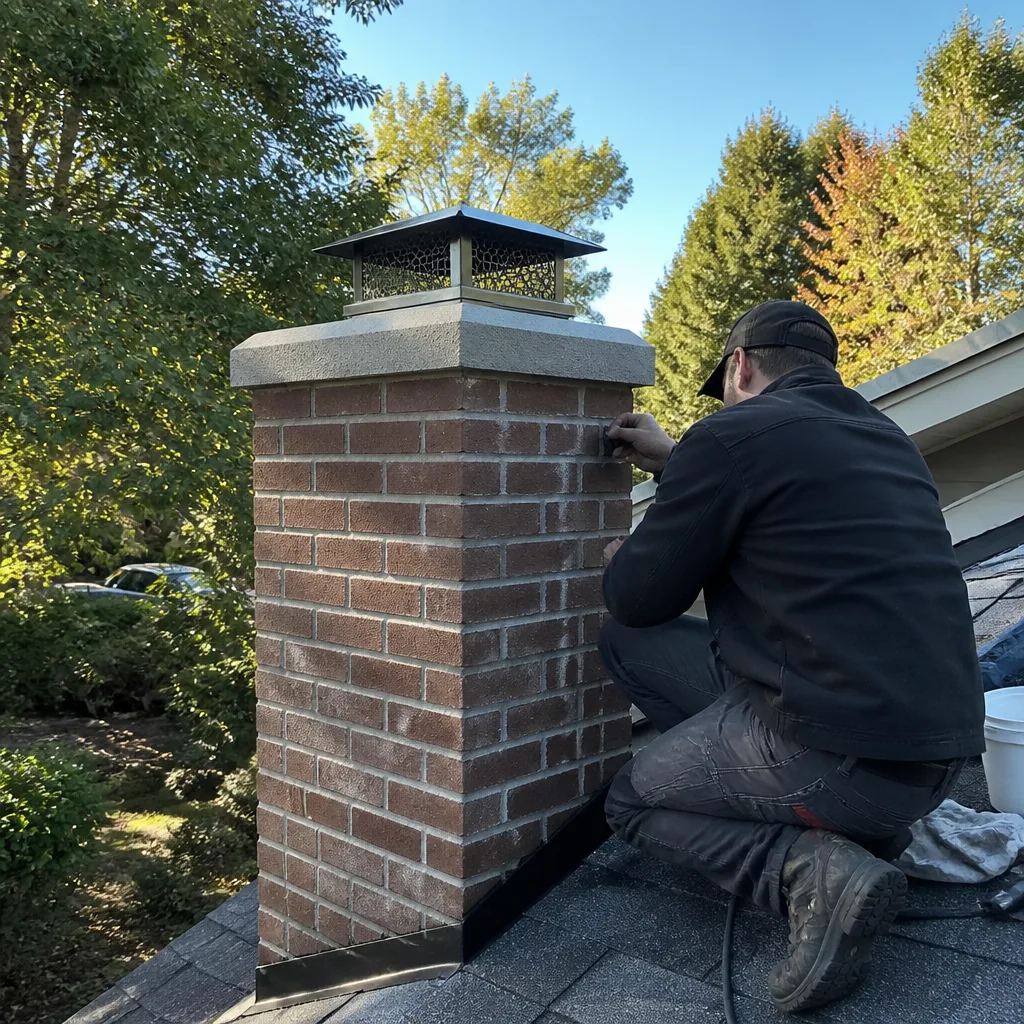 After
After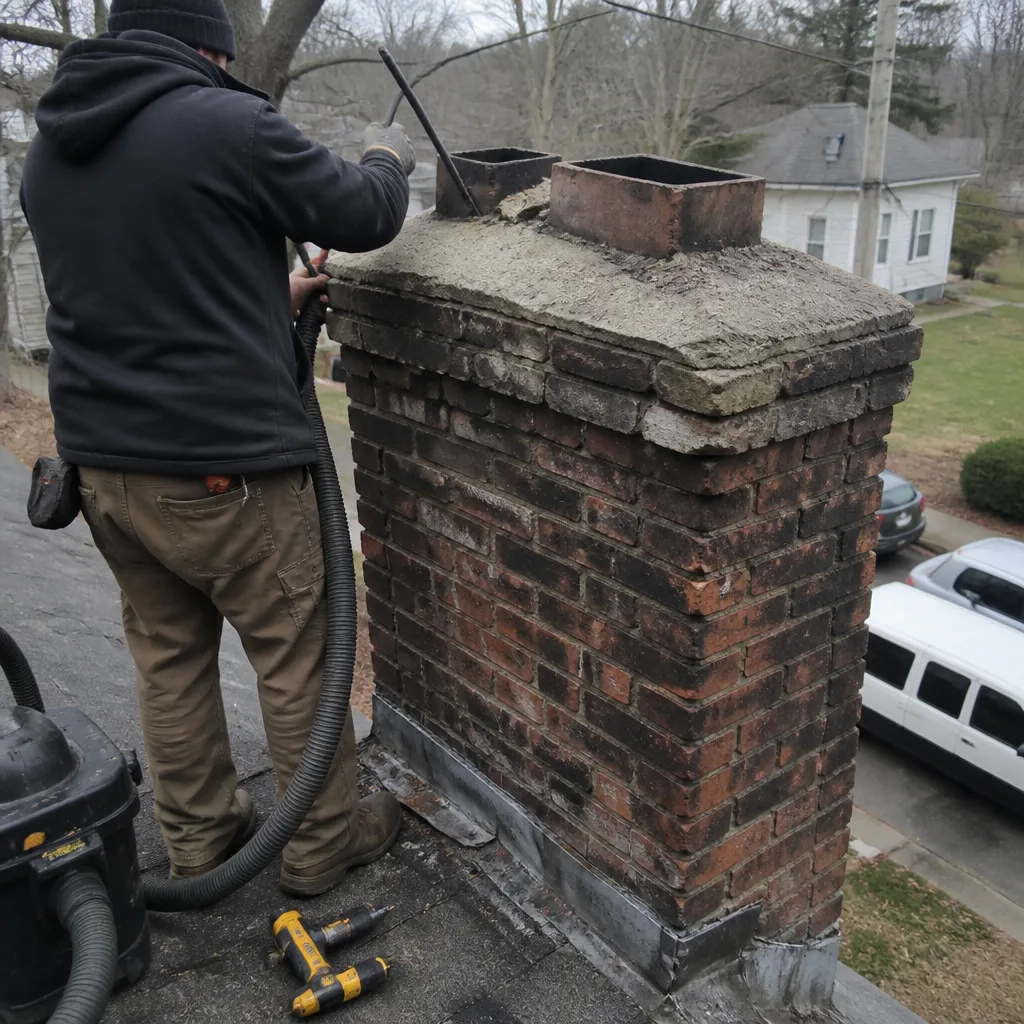 Before
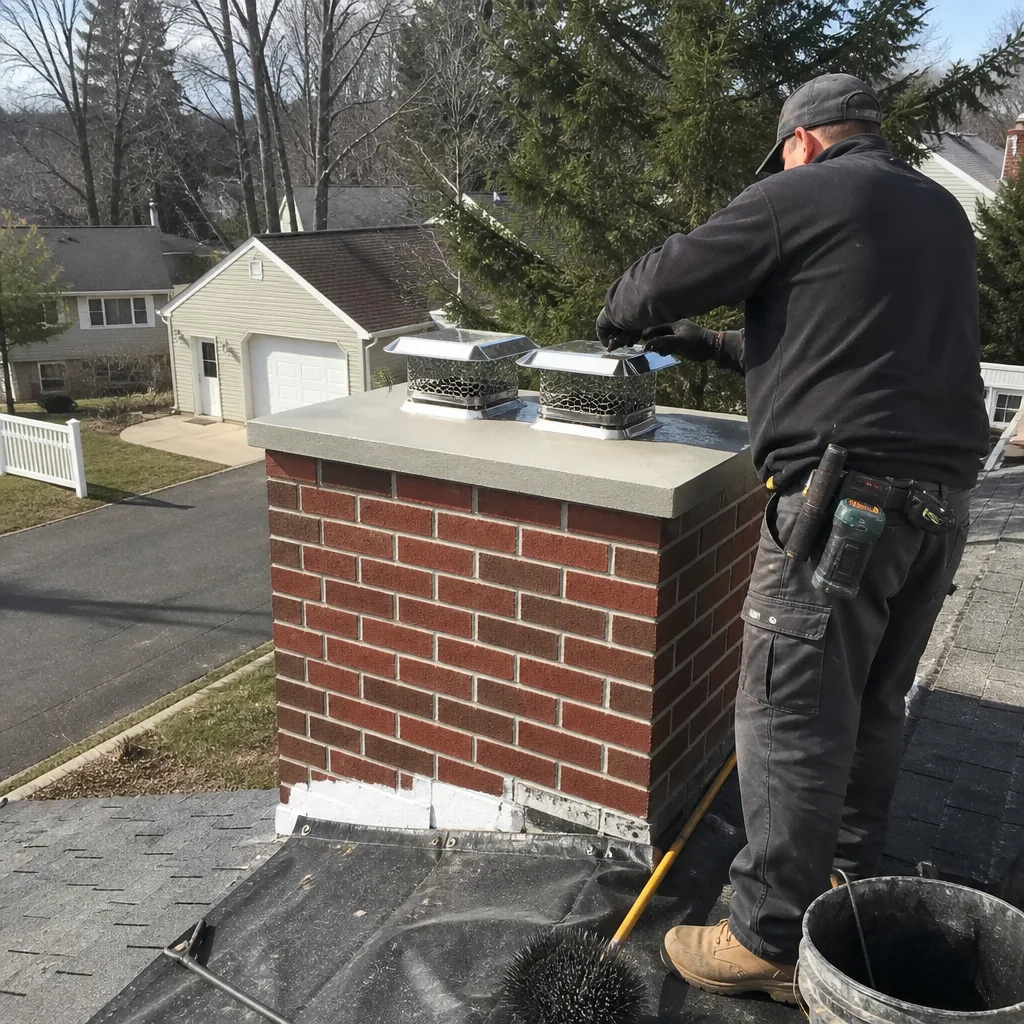 After
AfterChimney Cleaning Warning Signs: A Waterbury Homeowner’s Reference Guide
Most homeowners in Waterbury only think about their chimney when smoke rolls back into the living room or the fire won’t draw. But the real warning signs start months, sometimes years, before that. They’re subtle: a smell that appears in July, a faint staining pattern on the brick, a sound you can’t quite place when the wind picks up. This guide describes exactly what each symptom looks, smells, and sounds like, so you can describe it accurately to a sweep before they arrive and know whether you’re dealing with a maintenance item or a genuine hazard.
Quick Answer
The most common chimney warning signs in Waterbury homes are a campfire or musty smell with no fire lit, smoke spilling into the room, white staining on exterior brick, and sounds of animals or debris in the flue. A strong creosote odor in warm weather usually means a draft reversal has developed, often from a partially blocked flue or liner damage, and it’s worth a professional look before the next burning season. Call a sweep when you notice any of these; a cleaning and camera inspection typically costs less than the repair bill that follows a chimney fire.
Table of Contents
- Smells That Shouldn’t Be There: What Each Odor Actually Means
- Lazy Smoke and Spillage: When the House Is the Problem
- Normal Settling vs. Sounds That Mean Something Moved
- What to Look for From the Ground: Brick, Stone, and Cap Warning Signs
- Water Where It Doesn’t Belong: Efflorescence, Damp Spots, and Rust
- Call This Week vs. Mention It Next Cleaning: A Practical Triage Guide
- Common Mistakes to Avoid
- When to Call a Professional
- Frequently Asked Questions
Smells That Shouldn’t Be There: What Each Odor Actually Means
Your nose is often the first warning system you have, and in Waterbury’s older housing stock it gets plenty of chances to work. The three odor categories we see most often are creosote smell, animal smell, and moisture smell, and each points to a different problem with a different level of urgency.
Creosote smell is the one people describe as “campfire in the living room” when no fire has been lit. It’s strongest in warm, humid weather, especially after rain. What you’re smelling is the flue reversing its draft: air that should rise is sinking back down through the chimney, carrying creosote odor with it. That happens when the flue is partially blocked, when the liner has cracked or shifted, or when the chimney simply has no cap to keep out the weather that accelerates creosote breakdown. If you smell this in July in Waterbury, something has changed inside the flue, and it will not fix itself by October.
Animal smell is sharper and more localized: a musky, oily odor, often accompanied by scratching or rustling. In Waterbury we see raccoons, squirrels, and chimney swifts regularly, and a deceased animal in a chimney smells nothing like a live one. A live animal is a removal job. A dead one is a removal job plus a cleaning, and the longer it sits, the worse both get. This is a call-this-week situation, not a mention-it-later one.
Moisture smell is the one homeowners most often mistake for a basement problem. It’s damp, earthy, sometimes slightly sour, and it tends to be strongest near the fireplace after heavy rain. It means water is getting into the chimney structure somewhere: a failed crown, cracked brick, missing mortar joints, or a cap that has rusted through. Left unaddressed through a Waterbury winter’s freeze-thaw cycles, that moisture expands inside the masonry and turns a $300 repair into a $3,000 one. Our Chimney Repair in Waterbury page covers the repair side of what moisture damage looks like once it’s opened up.
Lazy Smoke and Spillage: When the House Is the Problem
Smoke that drifts into the room instead of up the chimney is called spillage, and there are two very different causes. Knowing which one you’re dealing with saves you from paying for a chimney repair when the real problem is your house.
Draft failure from the chimney itself usually shows up as smoke that spills on startup and then gradually improves, or smoke that suddenly starts spilling after years of working fine. The causes include creosote buildup narrowing the flue, a collapsed liner, a blocked cap, or an animal nest. In older Waterbury chimneys with clay tile liners, a cracked or shifted tile is common and can create an obstruction that forces smoke back into the room.
Draft failure from the house is a competition problem. Modern homes, even older ones that have been updated with new windows, insulation, or a stronger kitchen exhaust fan, can be tight enough that the chimney cannot pull enough air to draft properly. You’ll notice this as smoke that spills whenever the bathroom fan runs, the dryer is on, or the furnace kicks in. The chimney itself may be perfectly clean, but the house is winning the air battle. This is especially common in Waterbury homes that have been weatherized over the years, and the fix is often a combustion air source rather than a chimney repair.
Here’s a simple sequence to work through before you call anyone:
- Open a window near the fireplace an inch or two. If the spillage stops, the house is starved for air, not the chimney.
- Turn off competing fans and appliances. If the spillage clears, it’s a house pressure issue.
- If smoke still spills with a window open and everything off, the problem is in the chimney itself, and it needs a sweep’s eyes, not a guess.
Normal Settling vs. Sounds That Mean Something Moved
Old houses make noise. Waterbury has thousands of them, and most of the pops and creaks you hear are exactly what they sound like: framing settling, roofing expanding, a branch against a gutter. But there are three sounds specifically associated with chimneys that deserve attention, and they’re distinct enough to describe accurately over the phone.
A metallic ticking or pinging when the wind blows or when the chimney heats up almost always indicates a metal liner that has come loose from its support or has cracked and is flexing. In Connecticut winters, a stainless liner expands and contracts dramatically, and over time the fasteners can fail. This is a liner movement sound, and it usually means the liner needs to be inspected and re-secured or replaced. If you hear it, don’t burn until it’s looked at.
Scratching, thumping, or fluttering that comes in bursts, usually in early morning or evening, is animal activity. Chimney swifts make a rapid fluttering sound during nesting season in May and June. Raccoons make heavier thumps and chittering sounds, often at night. Squirrels sound lighter and faster, almost like a rustle with an occasional skitter. None of these sounds resolve on their own, and all of them mean something is living in or entering your flue. Our Chimney Cleaning & Sweep in Waterbury page explains what a full cleaning and cap installation involves when animals have been present.
A low rumble or boom when it’s windy outside is called stack effect turbulence. It usually means the chimney cap is missing or damaged, allowing wind to enter the flue at the top and create pressure waves that travel down. You may also smell chimney odors when this happens, since the same wind that causes the sound also drives flue gases back down into the house.
What you should not worry about: the occasional soft pop from the firebox as it heats and cools. Firebrick expands at a different rate than the surrounding masonry, and a faint sound is normal. It’s the wind-driven metallic sounds and the animal sounds that require action.
What to Look for From the Ground: Brick, Stone, and Cap Warning Signs
You don’t need a ladder to spot most exterior chimney problems. In fact, a ladder is the wrong tool for a homeowner; what you can see from ground level with a decent pair of eyes, or better yet a pair of binoculars, is usually enough to identify the warning signs that matter.
White staining on the brick or stone is called efflorescence, and it’s not just a cosmetic issue. It means water is moving through the masonry, dissolving salts from the mortar and brick, and carrying them to the surface where the water evaporates and leaves the salt behind. A little efflorescence after a rainy season is common in Waterbury’s climate. Heavy, recurring, or worsening efflorescence means water is penetrating deeper and more often than the masonry can handle, and freeze-thaw damage in a Connecticut winter will accelerate from there. Our Fireplace Services in Waterbury page covers related fireplace and masonry concerns.
Dark staining or rust-colored streaks running down from the crown or cap indicate either water is pooling on the crown and running down the brick, or the cap itself is rusting. A rusted cap can’t keep rain, snow, or animals out, and a damaged crown lets water into the flue and the chimney structure at the same time. Both are repairs, not cosmetic concerns.
Missing or cracked bricks, and mortar joints that look like they’re crumbling are structural red flags. Mortar joints should look crisp and slightly recessed, not soft, sandy, or deeply eroded. If you can run a finger along a joint and loose sand comes away, the chimney has advanced mortar deterioration, called spalling, and the masonry needs repointing before the structure loses its integrity. This is one of the most common issues in Waterbury’s pre-war housing stock, and it gets worse every winter.
Water Where It Doesn’t Belong: Efflorescence, Damp Spots, and Rust
Water is the single most damaging force a chimney faces, and in Waterbury, where the annual freeze-thaw cycle is relentless, it never takes a season off. The warning signs of water intrusion are consistent across every chimney type, and they’re all visible to a homeowner who knows what to look for.
Inside the house, look for dampness or staining on the wall adjacent to the chimney, especially after heavy rain. Peeling paint, soft drywall, or a persistent musty smell near the fireplace all point to water moving through the chimney chase or masonry. On the firebox floor, a small puddle or water stains after a storm mean the flue is open to the weather, usually through a missing cap or a cracked crown.
On the exterior, watch for the efflorescence and dark staining patterns described above, plus any spalling: brick faces that have popped off, leaving a rough, exposed interior surface. Spalling is what happens when trapped water freezes, expands, and blows the surface off the brick. It’s progressive, and it’s visible from the ground once it starts.
At the top of the chimney, the parts you can’t easily see are the ones that fail first. The crown, which is the concrete slab at the very top, cracks over time from thermal stress and water exposure. The cap, which covers the flue opening, rusts through on older models. Both failures let water directly into the flue and the masonry, and both are caught quickly with a camera inspection during a routine chimney cleaning. This is why we include camera footage with every job; you should be able to see exactly what’s happening up there, not take anyone’s word for it.
Call This Week vs. Mention It Next Cleaning: A Practical Triage Guide
Not every warning sign is an emergency, and a good sweep will tell you that plainly. Wendell has talked more Waterbury homeowners out of unnecessary work than he has into it. Here’s how to sort what you’re seeing.
Call this week:
- A strong creosote or smoke smell when no fire is lit, especially in warm months. This means the flue is partially blocked or the liner has failed, and it’s a carbon monoxide and fire risk.
- Smoke spilling into the room during use, even intermittently. You’re breathing combustion byproducts, and the draft has failed for a reason.
- Animal sounds or a dead animal smell. A live animal is a blockage waiting to happen; a dead one is already a health issue.
- Water pooling inside the firebox or visible water stains on interior walls near the chimney. Water waits for no one in a Connecticut freeze-thaw cycle.
- Any metallic sound from the flue when it’s windy. A loose or cracked liner is not safe to burn with.
Mention at your next annual cleaning:
- Faint, occasional mustiness near the fireplace that clears quickly and doesn’t correspond to rainfall.
- Minor efflorescence that appears, stays flat, and doesn’t worsen season to season.
- A damper that’s slightly sticky or a firebox that needs occasional touch-up. These are normal wear items.
- Mild creosote buildup visible on the damper frame after a season of burning. This is expected and what your annual cleaning is for.
The distinction matters because not everything needs a repair visit, and you should never feel pressured into one. But the call-this-week items share a common thread: they involve fire safety, carbon monoxide risk, or active water damage, and those don’t wait for the next appointment.
Common Mistakes to Avoid
- Assuming a smell in summer will clear up in winter. It won’t. A campfire smell in July means the flue is already compromised, and burning season will make it worse, not better.
- Trusting a visual check of the firebox only. What you can see from the hearth tells you almost nothing about what’s happening in the flue. The flue is where the creosote, the cracks, and the blockages are.
- Ignoring efflorescence as “just cosmetic.” In Waterbury’s freeze-thaw climate, efflorescence is a water intrusion signal, and the damage compounds every winter it goes unaddressed.
- Fixing the wrong problem when smoke spills. If your house is too tight for the chimney to draft, cleaning the chimney won’t help. Open a window before you spend money.
- Waiting until fall to book a cleaning. Waterbury’s schedule fills up by September, and a chimney that needed attention in July is still waiting in November. Book it off-season.
- Hiring based on the phone quote alone. A low quote that changes at the door is the classic bait-and-switch. Get the price in writing before the work starts, and ask whose name is on the job.
When to Call a Professional
Call a sweep when you smell creosote with no fire lit, when smoke spills into the room, when you hear animals or metallic sounds in the flue, when you see rust streaks or heavy efflorescence on the exterior brick, or when water is entering the firebox after rain. These are the warning signs that something has changed in the chimney’s ability to do its job, and guessing at the cause costs more than the inspection. Top Hat Chimney offers free estimates in Waterbury, with camera footage and a plain-English verdict on every single job. Call (203) 439-5655. Wendell has served Waterbury since 1999, and he answers his own phone. Ask anyone on your street.
Frequently Asked Questions
Once a year, burn or no burn, and we mean it. Waterbury’s humid summers and hard winters stress masonry and liners even when the fireplace sits unused, and an annual cleaning with a camera inspection catches problems when they’re brush jobs instead of rebuilds. If you burn more than a cord a season, or you burn softwood or unseasoned wood, you may need a mid-season cleaning on top of the annual one. Our Chimney Cleaning & Sweep in Waterbury page walks through what a typical visit includes.
Creosote smell is smoky, acrid, and most noticeable in warm weather when a draft reversal sends flue air back into the house. Moisture smell is damp and earthy, strongest after rain, and usually points to a water leak through the crown, cap, or masonry. Both should prompt a call, but creosote odor is a more urgent fire and carbon monoxide signal because it indicates the flue is partially blocked or the draft has failed.
You can check the parts you can see from the ground: exterior brick, mortar joints, the cap if it’s visible, and any staining patterns. What you cannot safely check without the right equipment is the flue interior, and that’s where the serious problems hide. A professional uses a camera to see the full flue, and high-tension components like caps, dampers, and liners should be left to a trained sweep. Always flag a dangerous condition rather than attempting a fix yourself.
If the liner is cracked, shifted, or collapsed, cleaning won’t make it safe to burn. A damaged liner lets heat and gases reach combustible framing, and in Waterbury’s older chimneys with clay tile liners, cracks are common. We install and service liners from DuraFlex and HeatShield, and we show you the camera footage before we recommend a single dollar of work. If the liner is sound but dirty, a cleaning is all you need. Call (203) 439-5655 for an exact quote; estimates are free.
Don’t light a fire, and don’t try to smoke them out by burning or with store-bought repellents. A live animal is best handled by a professional who can remove it safely and then install a proper cap, from a manufacturer like Olympia Chimney or Gelco, to keep them out permanently. If the animal has died, the removal and cleaning need to happen together. This is a call-this-week situation either way.
No, and that distinction breeds dangerous complacency. A chimney fire is a fire contained inside the flue, usually fed by burning creosote, and it may sound like a low roar or rumble. Some chimney fires burn themselves out when the creosote is consumed; many don’t. The critical thing is that even a contained chimney fire can crack the liner and weaken the masonry, creating a path for the next one to become a house fire. Any chimney fire means the chimney is done until it’s inspected and repaired, full stop. Our Chimney Repair in Waterbury page explains what the inspection and repair process looks like.
The Bottom Line
Your chimney talks before it fails. It smells, it stains, it makes sounds in the wind, and it tells you when water is getting in. The homeowners who catch problems early are the ones who pay for a cleaning and a cap instead of a liner and a rebuild. If you’re seeing any of the warning signs in this guide, the next step is simple: call a sweep who works your town, puts his name on the job, and shows you the camera footage before he asks for a dollar. In Waterbury, that’s Top Hat Chimney, and we’ve been here since 1999. Once a year, burn or no burn, and you’ll never have to wonder what that smell was.
Written by Wendell Pike, Owner at Top Hat Chimney, serving Waterbury since 1999.