
Last updated September 10, 2026
Level 1 sweep and inspection to the NFPA 211 annual standard - flue, crown, cap, and flashing checked and photographed
Chimney sweep logs do not sweep chimneys. They loosen some creosote - which then falls where a brush and vacuum still have to collect it.
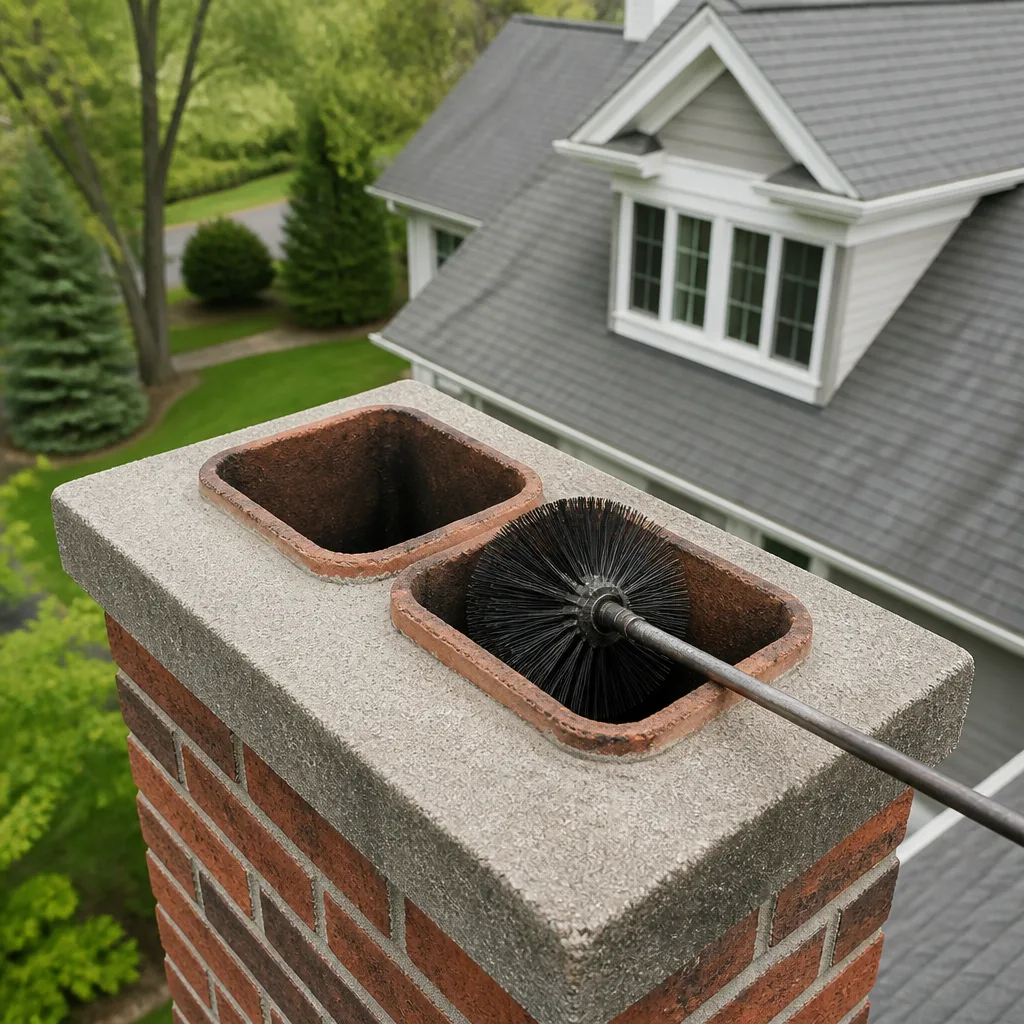
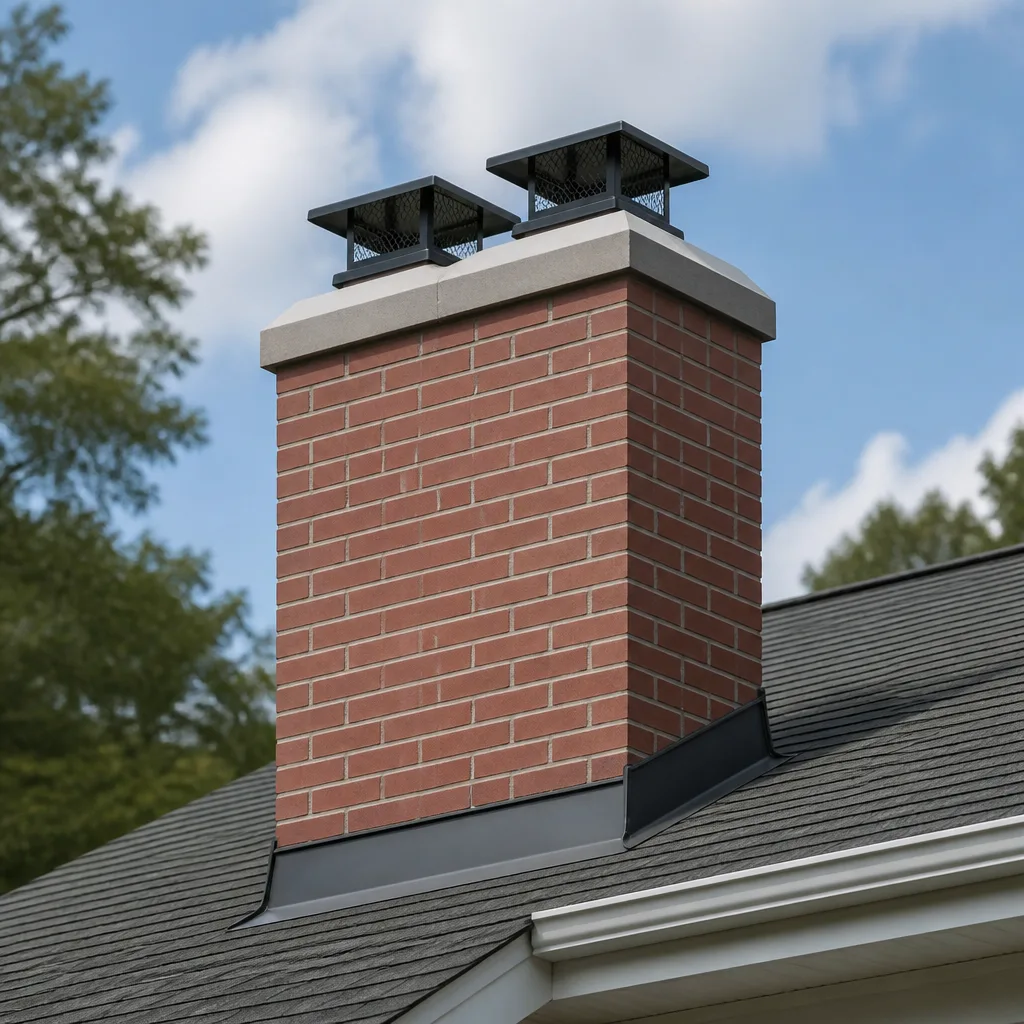
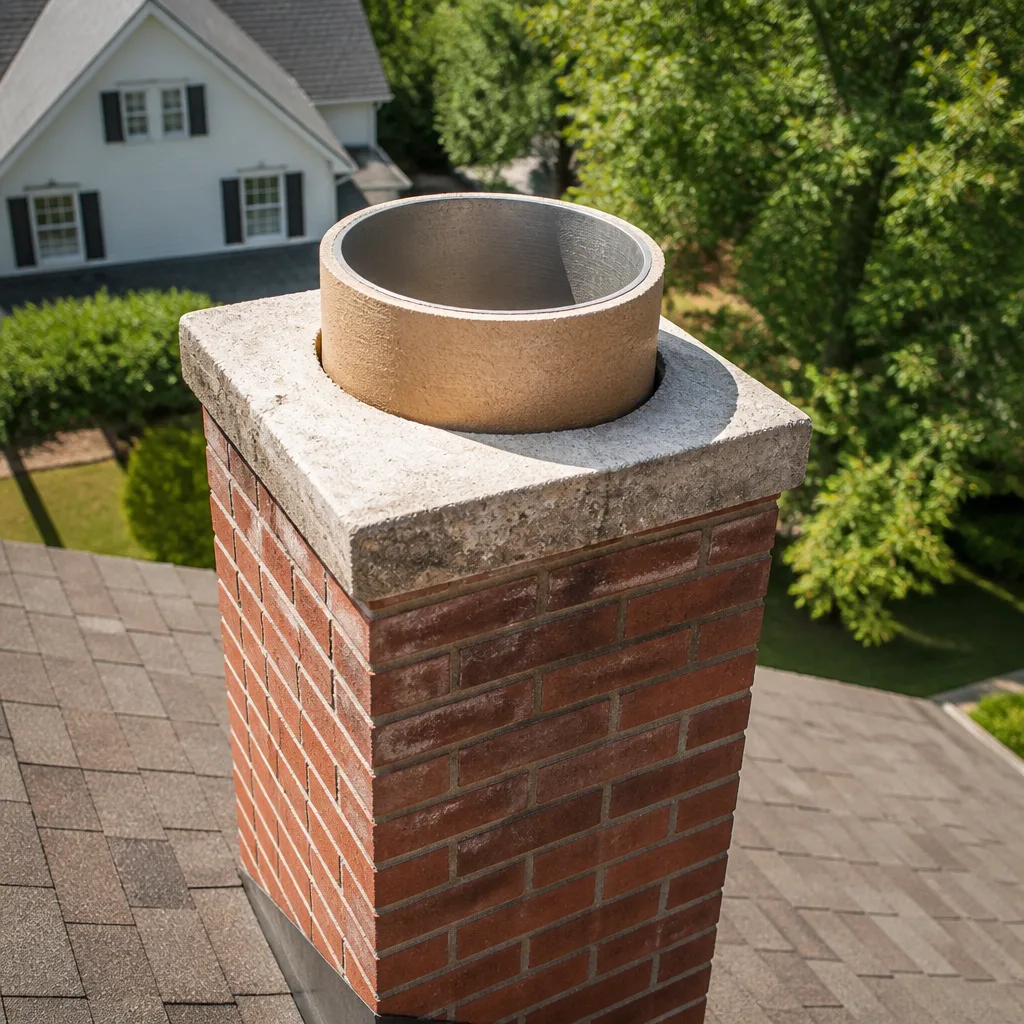
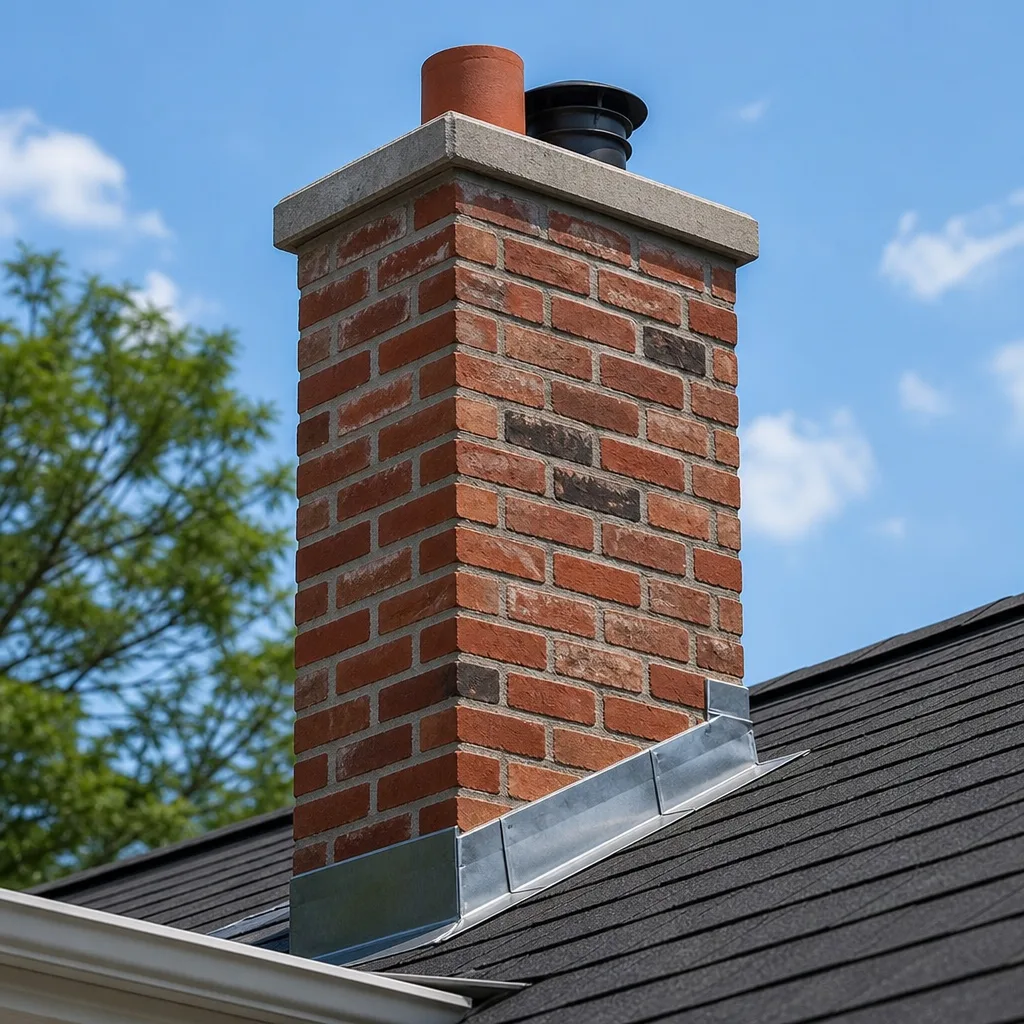
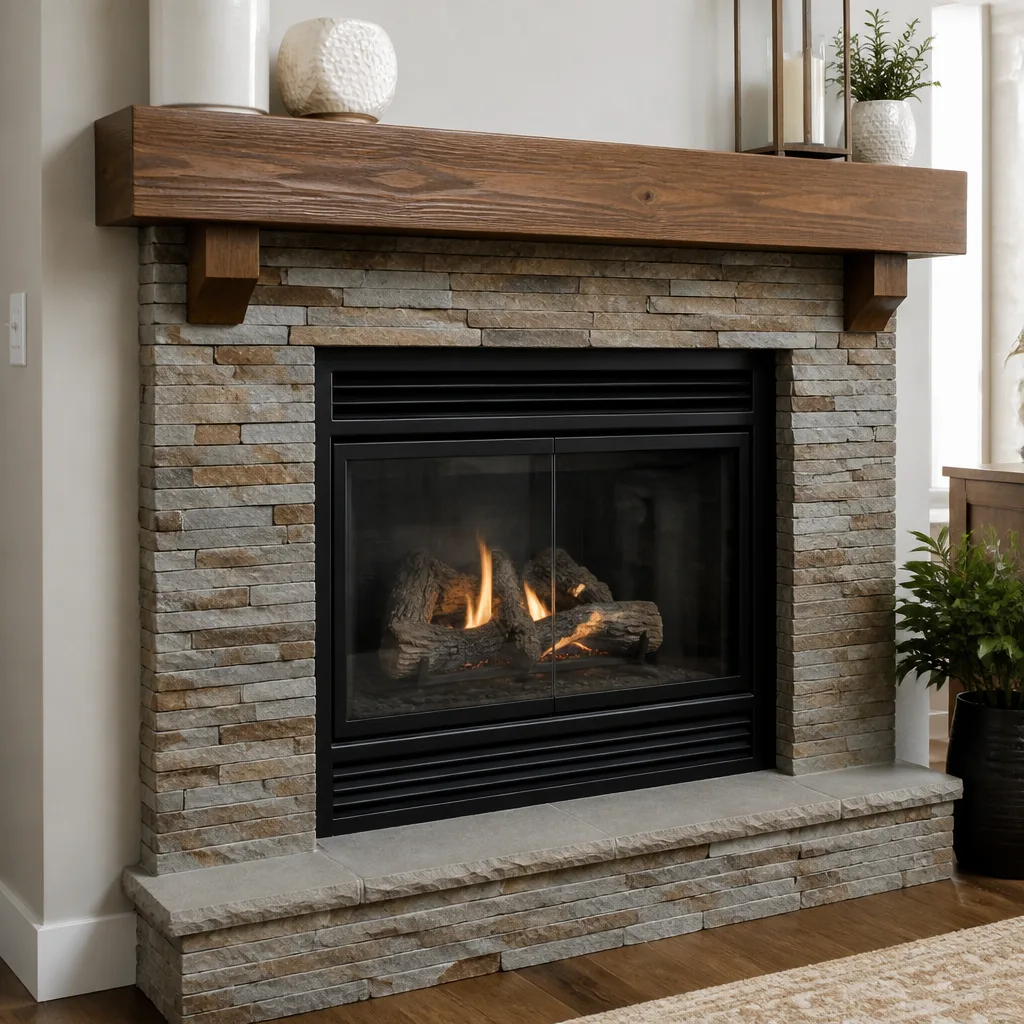
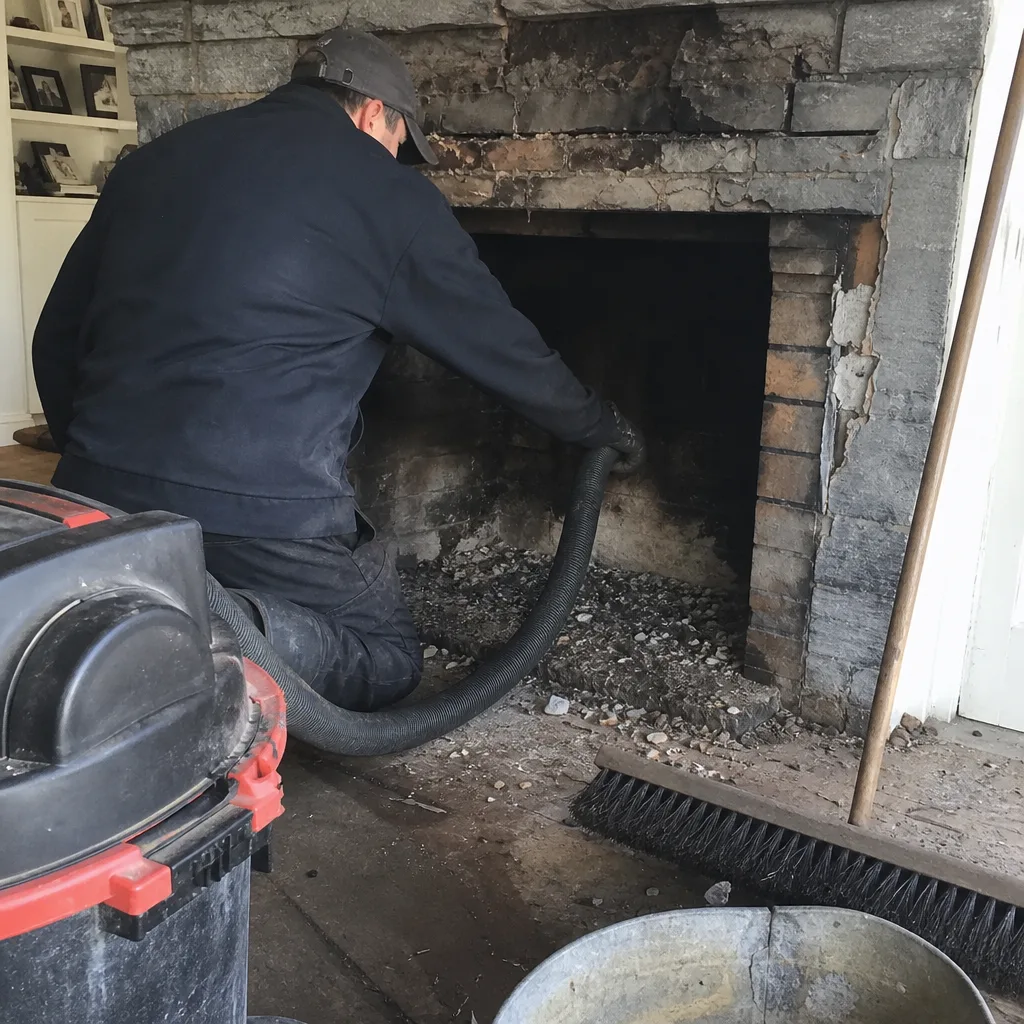 Before
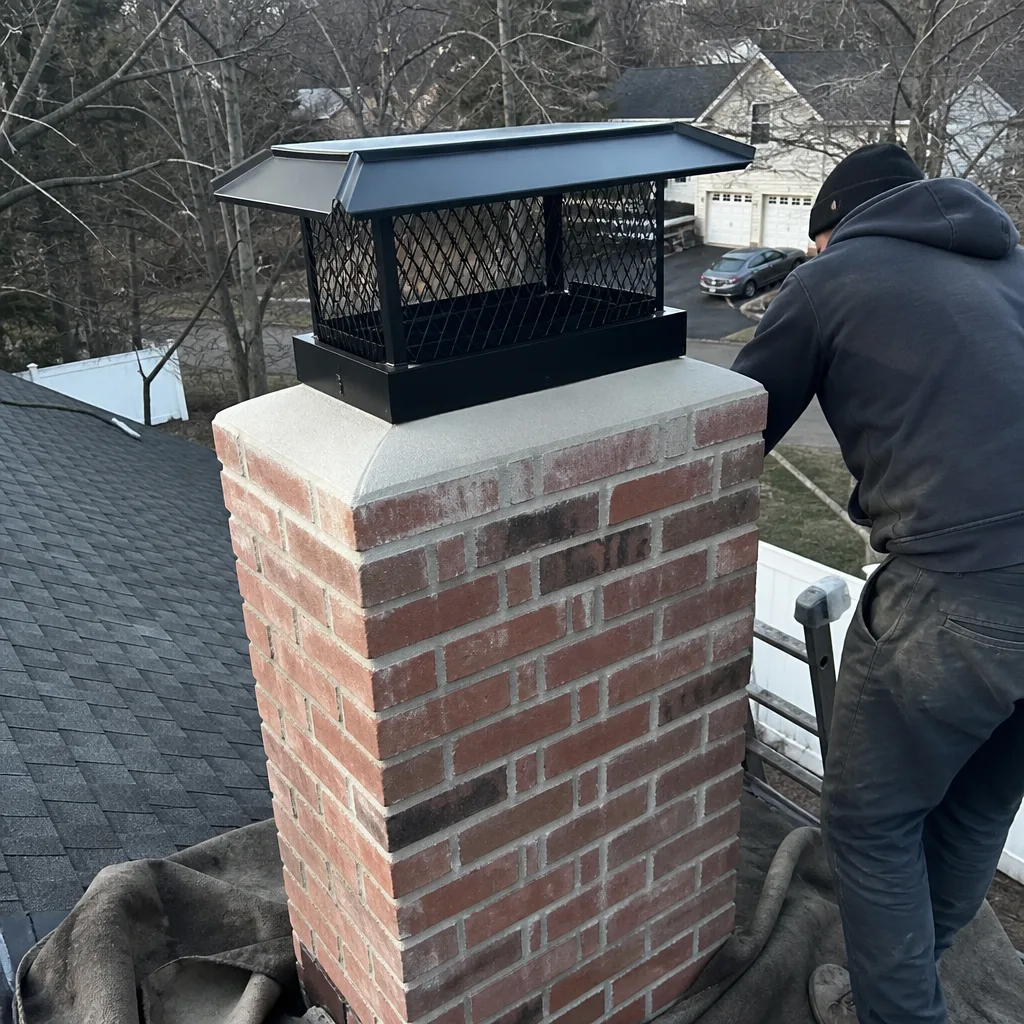 After
After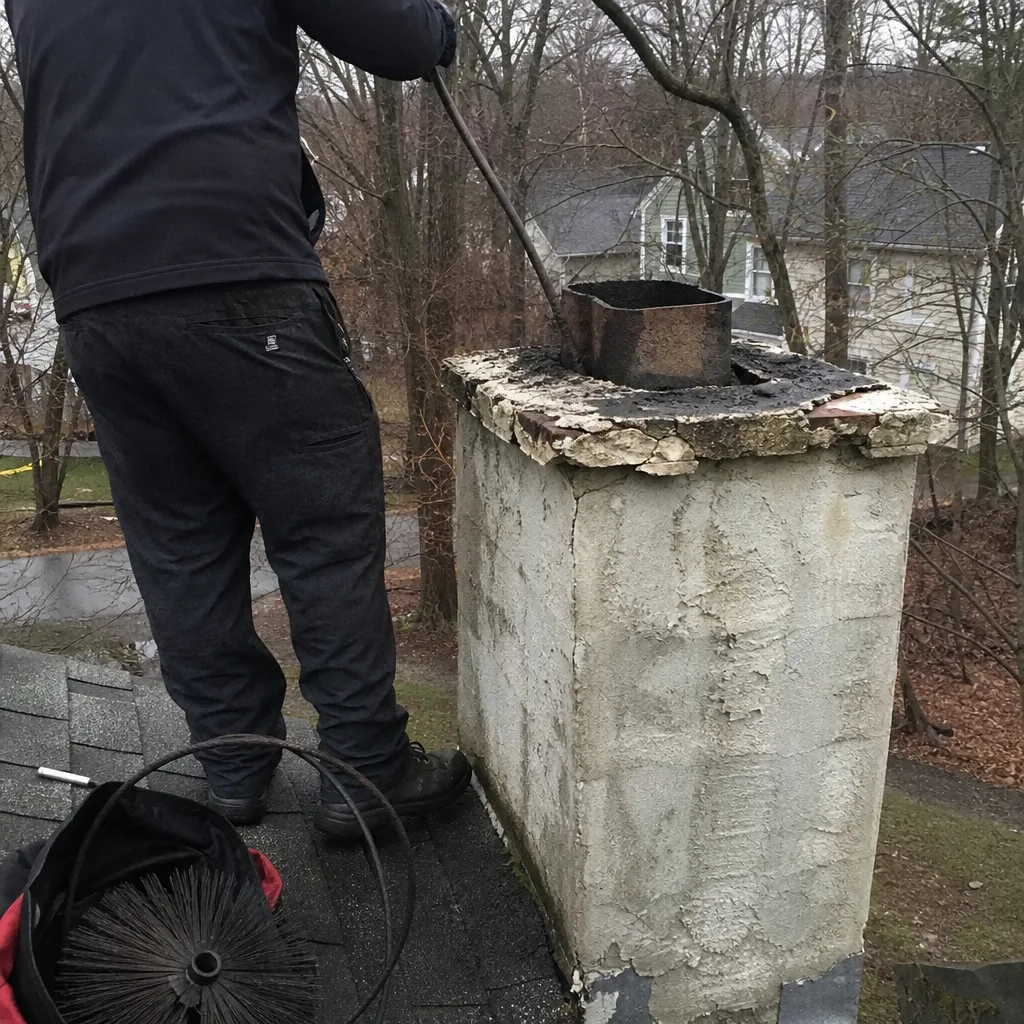 Before
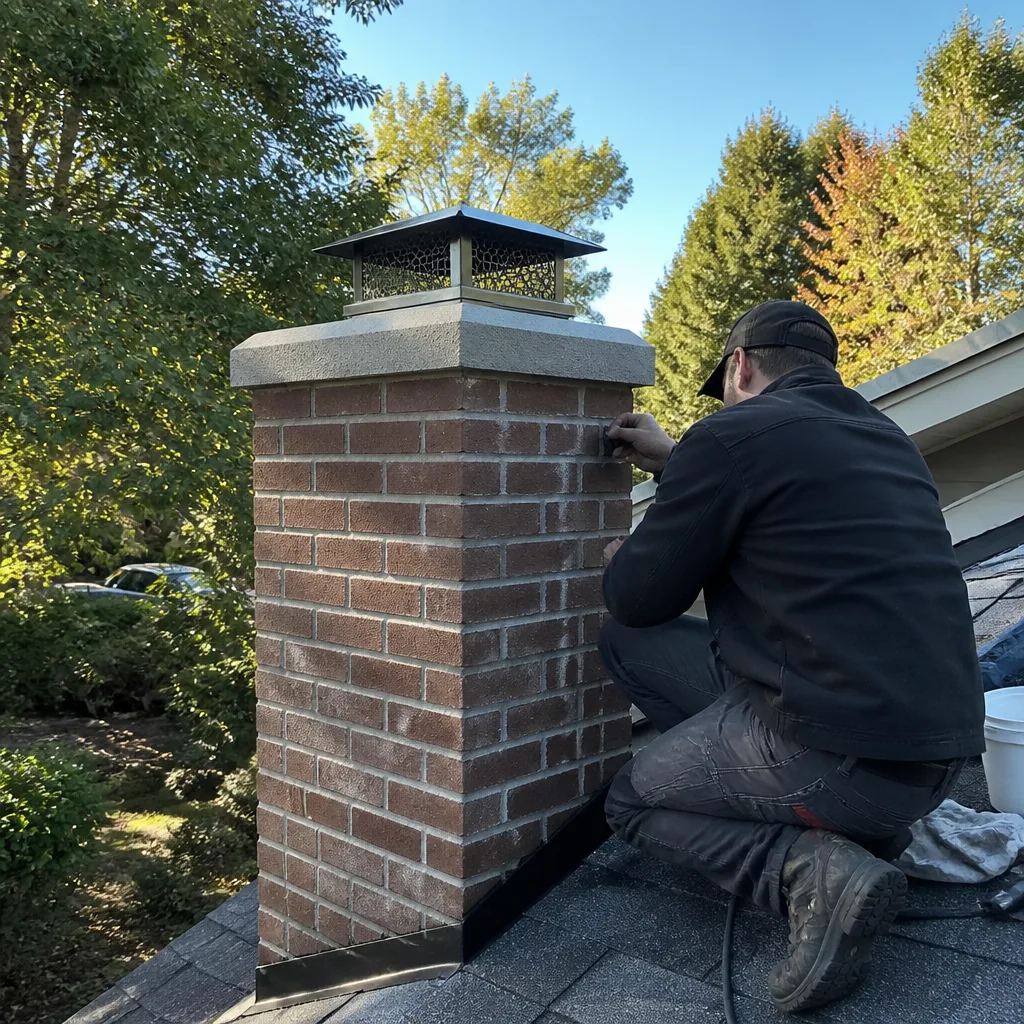 After
After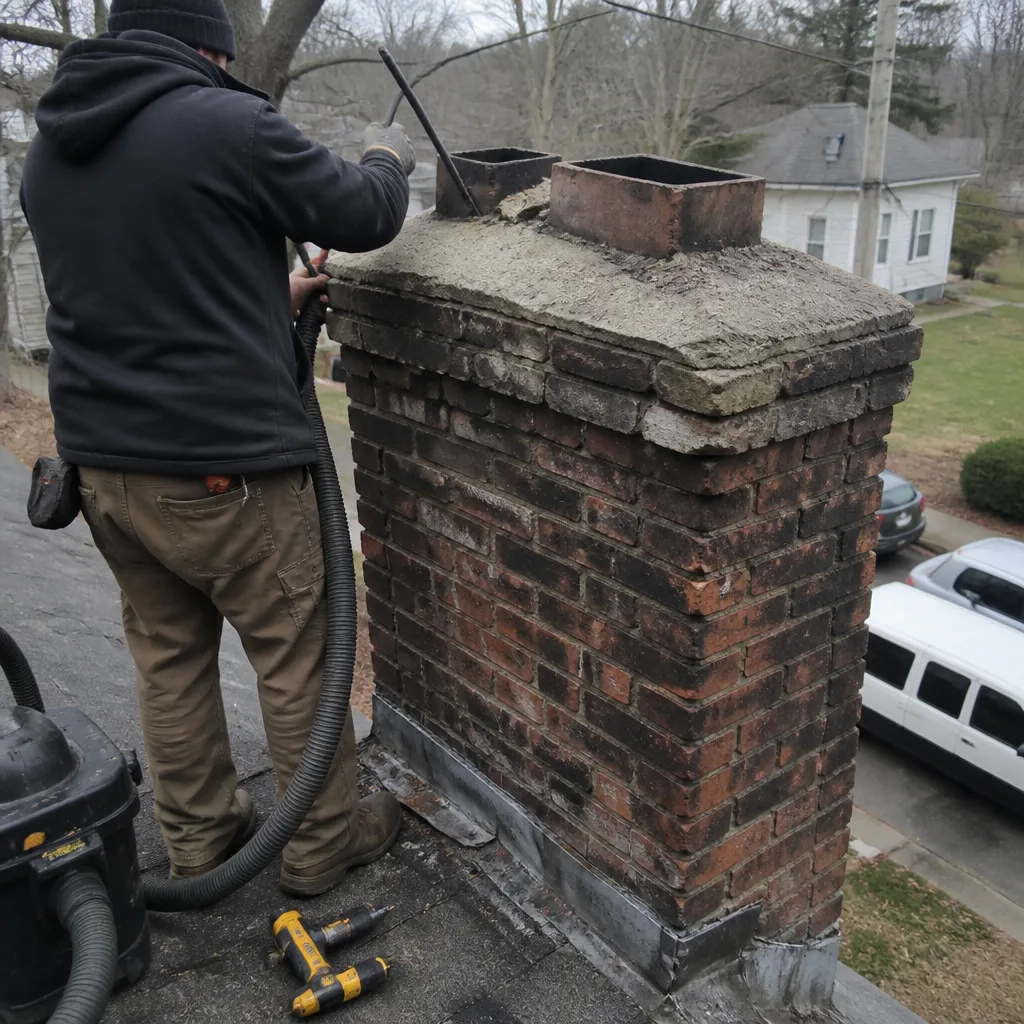 Before
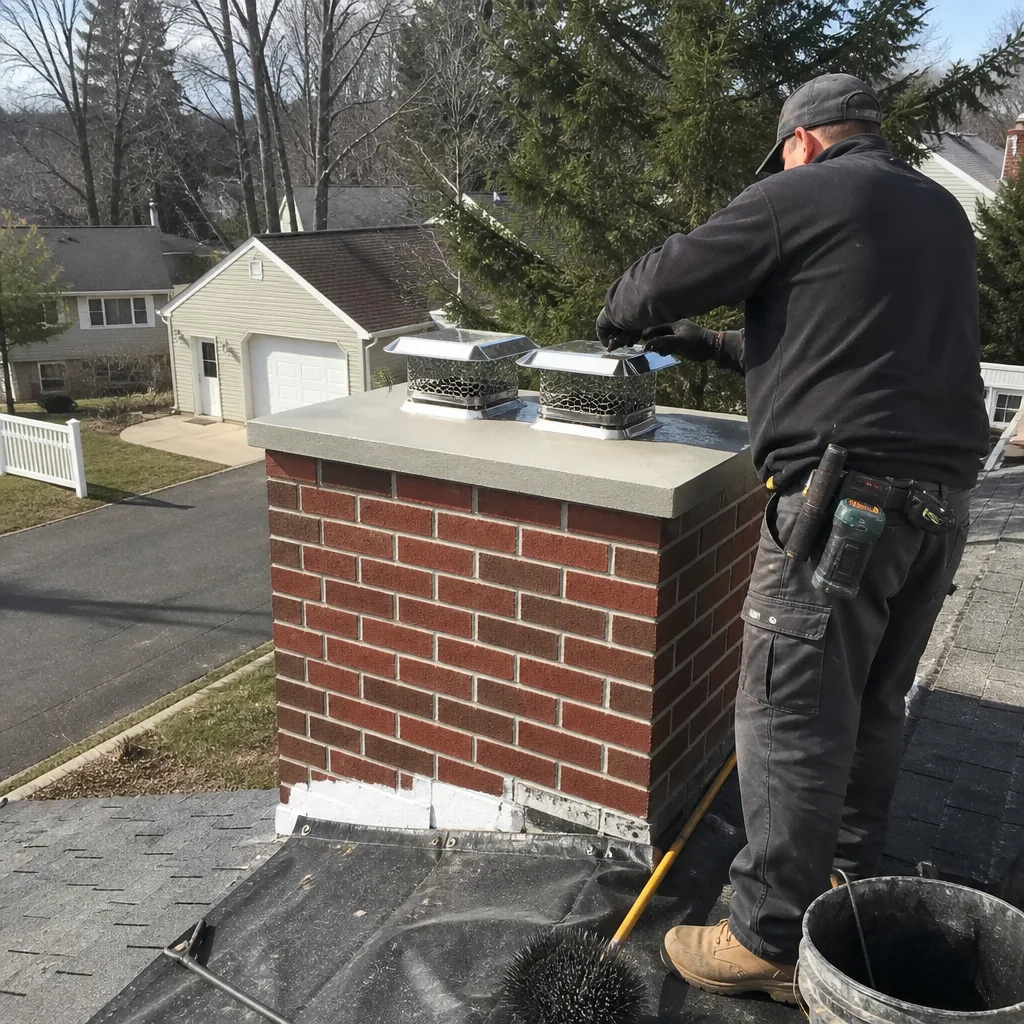 After
AfterDIY vs Professional Chimney Cleaning: The Waterbury Homeowner’s Decision Guide
Here’s something most chimney sweep companies won’t tell you: a homeowner with the right brush kit and a free Saturday afternoon can absolutely clean a simple, straight flue. The hardware store kits work fine for Stage 1 creosote on a masonry chimney with no offsets, no liner issues, and no animal activity. The problem in Waterbury is that most homeowners can’t confirm those conditions before they start. And finding out mid-job that you have a cracked liner or a family of squirrels living above the damper puts you in a worse spot than if you’d called someone first. This guide walks through exactly how to figure out which category your chimney falls into before you climb a ladder or pick up a phone.
Quick Answer
DIY chimney cleaning is reasonable only when you have a straight flue with mild Stage 1 creosote, full roof access, and no signs of liner damage, animal blockage, or structural wear. For everything else, professional cleaning in Waterbury typically costs $189 to $325-see our Chimney Cleaning Cost Breakdown: The Waterbury Homeowner’s Reference for 2026 for full pricing details-and includes the camera inspection and plain-English verdict a DIY job can’t give you.
Table of Contents
- What DIY Can Honestly Handle
- What DIY Cannot Handle, Regardless of Skill
- The Pre-Cleaning Assessment: 5 Steps to Know Your Chimney
- DIY Tools, Cost, and What the Job Actually Looks Like
- The One Scenario Where We Tell You to Do It Yourself
- Three Scenarios Where You Should Save the Hassle and Call
- What Waterbury Homes Specifically Deal With
- Common Mistakes to Avoid
- When to Call a Professional
- Frequently Asked Questions
- The Bottom Line
What DIY Can Honestly Handle
Let’s be straight about what a weekend chimney cleaning actually is. You’re removing creosote buildup from the flue walls and clearing straightforward debris like soot, small twigs, or leaves that have dropped in from an uncapped chimney. That’s it. The push-pull motion of a wire brush on fiberglass rods dislodges the soft, flaky creosote that forms during normal wood burning. You’re not repairing anything. You’re not diagnosing anything. You’re cleaning a tube.
A chimney is genuinely DIY-able when all of these are true:
- The flue runs straight from the firebox to the cap with no bends, offsets, or elbows
- The creosote is Stage 1 (soft, brown or black, flaky like dried coffee grounds) and you can verify this with a flashlight
- The roof is walkable and the chimney is reachable without extension ladders on questionable footing
- There’s a properly installed chimney cap and no sign of animal intrusion
- The liner, whether clay tile or stainless steel, is visibly intact where you can see it from the top and bottom
- You have a helper on the ground who can steady the ladder and relay tools
If all six conditions hold, the job is physically demanding but technically simple. You’ll spend two to three hours on the roof, in the firebox, and cleaning the mess afterward. That’s the other part nobody mentions in the hardware store aisle: the dust. A chimney cleaning produces a fine soot that finds its way past drop cloths and into air returns. Professional sweeps use HEPA-filtered vacuums and still spend twenty minutes containing the room. A DIY job with a shop vac will be dustier. Plan for it.
In our experience with Waterbury homes, roughly one chimney in four actually meets all six conditions. The rest have an offset from a second-floor addition, a deteriorated clay liner, years of neglected creosote, or a raccoon that moved in during a mild January thaw. And those are the ones where a brush kit does more harm than good.
What DIY Cannot Handle, Regardless of Skill
Here’s where the honest assessment gets uncomfortable. There are configurations where no brush kit, no YouTube tutorial, and no amount of determination makes DIY cleaning a safe or smart choice. Skill is not the limiting factor. Access and risk are.
Offsets and bends in the flue. Older Waterbury colonials and Victorians frequently have chimneys that jog around framing. A rigid fiberglass rod cannot follow a bend. It binds. It snaps. When it snaps mid-flue, you now have a broken rod segment lodged above your damper, and retrieving it often requires removing the damper assembly or cutting an access hole. That repair costs more than ten years of professional cleanings.
Stage 3 creosote. First-degree creosote is a brush job. Third-degree is a glaze, catch it early. Stage 3 creosote looks like tar: shiny, hard, black, and baked onto the flue walls. A wire brush skates across it without removing anything. This requires chemical treatments, rotary loop systems with chains, or both, followed by removal and disposal of the residue. DIY attempts create the illusion of cleaning while leaving the most combustible form of creosote untouched.
Clay tile liner damage. If you have a clay tile liner and can see cracks, spalling, or missing tile segments, brushing can dislodge weakened clay and send it falling into the smoke shelf. A cracked clay liner is a fire and carbon monoxide risk on its own. Brushing it without addressing the underlying damage is like repainting a rotted windowsill.
Animal blockages. Squirrels, raccoons, and chimney swifts nest in flues throughout the Waterbury area every spring. The nest material is oily, packed, and sometimes alive. You do not want to discover a nesting raccoon from the top of a ladder. And disturbing a chimney swift nest is a federal violation under the Migratory Bird Treaty Act. A professional knows how to identify what’s up there, what can be removed, and what has to wait.
These four configurations account for the majority of chimneys we see in Waterbury on a first visit. They are not rare. They’re the reality of a housing stock where many chimneys were built before 1960 and have served decades of Connecticut winters.
The Pre-Cleaning Assessment: 5 Steps to Know Your Chimney
Before you spend money on a brush kit or a service call, spend twenty minutes on the assessment below. It tells you which category you’re in. Done honestly, it saves you from a failed Saturday or from paying for a service you could have handled yourself. This is the exact same first-pass evaluation Wendell does when he walks through a door in Waterbury.
- Look up from the firebox. Open the damper and shine a bright flashlight up the flue. Can you see a clear, straight path to daylight? Or does the flue bend out of view? A straight view means a straight flue. If you can’t see daylight at all, something is blocking the path, and you should treat that as an animal or debris issue until proven otherwise.
- Scrape the flue wall at eye level. With the damper open, run a metal tool (a fireplace poker tip or a long screwdriver) gently along the flue wall where you can reach. What comes off? Soft, flaky black powder is Stage 1. Crumbly, shiny shards that break like peanut brittle are Stage 2. Nothing comes off because the surface is slick and hard? Stage 3. Stage 1 is the only one where a DIY wire brush is the right tool for the job.
- Check the cap and crown from the ground. Walk around the house and look at the top of the chimney with binoculars if you have them. Is there a cap installed? Is the concrete crown cracked or missing chunks? A missing cap means animals and rain have had open access, and a failed crown means water is getting behind the brick. Both elevate this beyond a simple cleaning.
- Assess roof access honestly. Your roof has a 12/12 pitch and the chimney is three stories up at the ridge? That is not a DIY roof to be on. Your roof is a low-pitch ranch rambler with the chimney within arm’s reach of the ladder? That’s workable. Be realistic about your balance, your ladder, and your helper. Most chimney injuries we hear about in this part of Connecticut are falls from ladders, not chimney fires.
- Check for moisture or odor at the firebox. A damp, musty smell or visible water staining on the firebox walls signals a leak above, usually at the crown, flashing, or cap. Water from a failed crown drips down and mixes with creosote to form a corrosive paste that attacks the liner. A brush cleaning doesn’t stop the water. You need the leak fixed first.
Take the results of these five steps and be honest with yourself. If steps 1, 2, and 4 all point to straight, Stage 1, and walkable, you’re in DIY territory. If any of them flag a problem, the brush kit won’t solve it.
DIY Tools, Cost, and What the Job Actually Looks Like
For the homeowner whose chimney genuinely qualifies, here’s what a legitimate DIY cleaning requires and what it costs in the Waterbury area as of the current season, though you may also want to check our Seasonal Chimney Cleaning Care for Waterbury: Year-Round Homeowner’s Guide for timing considerations.
Tools you actually need:
- Wire chimney brush sized exactly to your flue dimensions (a 6-inch brush in an 8-inch flue cleans nothing; an 8-inch brush in a 6-inch flue jams) - expect $20 to $40
- Fiberglass rods in 4-foot sections with secure couplings - $30 to $60 for a set that reaches your flue length
- Drop cloths that fully cover the hearth and several feet beyond, taped in place - $15 to $25
- A high-volume shop vacuum with a fine-dust filter (not the standard filter, which will clog and blow soot back into the room) - $40 to $90 if you don’t already own one
- Ladder tall enough to reach the chimney crown comfortably, with someone holding it - you likely own or can borrow this
- Safety glasses and an N95 or better dust mask - $15 to $30
Total honest cost: roughly $120 to $245 for a one-time kit, assuming you already own a ladder. A professional cleaning from a Waterbury sweep runs $189 to $325 for a standard open masonry fireplace, and that includes the inspection, the camera check, the HEPA vacuum, the cap check, and the clean-up. The cost spread is narrower than most people expect, and the professional visit includes things no brush kit can replicate.
What the job looks like inside:
You’ll spend the first hour on prep: covering furniture, sealing the firebox opening with a tarp and tape, laying drop cloths, and staging the vacuum. Then the roof work: rods assembled one at a time as you push the brush down the flue. Expect forty-five minutes to an hour of repeated push-pull scrubbing on the roof. Then back down to vacuum the firebox, sweep the smoke shelf (which is hard to reach through a standard damper opening with a shop vac), and clean the soot dust off the hearth, the floor, and potentially nearby surfaces. Then you disassemble everything, carry tools down, and shake out the tarps outside. All in, it’s a four-hour job on a straightforward chimney, and your back and knees will know you did it.
The brushes and rods are durable if stored dry, so subsequent years cost only your time. That’s the real DIY savings. But the first year’s cost isn’t dramatically lower than a professional visit, and the professional visit delivers a camera report you can act on.
The One Scenario Where We Tell You to Do It Yourself
Wendell will be the first to tell you: if your chimney meets all the straightforward criteria and you enjoy working with your hands, go clean the thing yourself. Specifically, if you have a ranch or low-pitch roof home in Waterbury with a straight flue, a properly installed cap, Stage 1 creosote confirmed by the scrape test, and a strong helper, a DIY cleaning is a reasonable job. You’ll save a couple hundred dollars, and you’ll understand your chimney better than you did before.
We say this because the point of a sweep is not to remove every simple cleaning from every homeowner’s to-do list. The point is to catch the dangerous conditions early and to do the work that genuinely requires a professional. A homeowner who cleans a qualifying chimney annually and calls us when the pre-cleaning assessment flags something unusual is doing it exactly right. We’d rather have you as that customer than as someone who ignored the chimney for fifteen years and now needs a liner replacement.
So if your twenty-minute assessment says straight, Stage 1, capped, walkable, and you have a helper and a free afternoon, buy the kit. Read the brush size instructions carefully. And if at any point the rod binds, the brush won’t move, or what you’re scraping turns out to be hard and shiny instead of soft and flaky, stop. Don’t force it. That’s a signal to call.
Three Scenarios Where You Should Save the Hassle and Call
Three situations come through our phones in Waterbury repeatedly, and in all three we tell the homeowner the same thing: you did the right thing by not starting.
1. You smell smoke in the house when the fireplace is not in use. That odor means the chimney is not drafting properly, and the usual causes are a blocked flue, a failed damper, a negative air pressure issue in the house, or a deteriorated liner. None of those are fixed by a brush. Diagnosing the cause requires a camera and experience with how Waterbury’s older homes behave. Brushing a chimney with a drafting problem can make the situation worse by dislodging creosote into a flue that won’t carry it away.
2. Your home has a manufactured or prefab fireplace with a metal chimney. Prefab fireplace chimneys are engineered systems. They require soft brushes appropriate for stainless steel, the clearances and components matter, and the wrong brush or the wrong technique damages the system. If your Waterbury home has a factory-built firebox with an air-cooled metal chimney, hire a sweep who services these systems specifically. The inspection report alone is worth the call because these systems have defined service lives that most homeowners don’t track.
3. It has been more than three years since the last cleaning, or you don’t know when the last cleaning happened. Creosote builds up in stages, and after a few Connecticut burning seasons without a sweep, the odds of Stage 2 or Stage 3 glaze are high. A DIY brush kit on a neglected chimney gives you false confidence. The brush removes the loose top layer while the hardened creosote remains, and you go into winter thinking you have a clean flue. That’s exactly how chimney fires happen. A professional visit after a long gap includes the camera inspection that shows you what’s actually on the walls, and that knowledge is worth more than the cleaning itself.
In all three cases, a call to Top Hat Chimney gets you an honest assessment first. See our chimney cleaning & sweep service in Waterbury for what a full visit includes. The camera footage and a plain-English verdict: every time, no exceptions.
What Waterbury Homes Specifically Deal With
Your chimney doesn’t exist in a vacuum. It exists in a house in Waterbury, Connecticut, where specific local conditions shape what goes on inside the flue. Here’s what we see again and again when we work in this city.
Freeze-thaw cycles and masonry damage. Waterbury winters swing through the freeze-thaw line dozens of times per season. Water soaks into brick and mortar, freezes, expands, and flakes the surface. The result is spalling brick, deteriorated mortar joints, and cracked crowns. These openings let water into the chimney system, and water plus creosote equals liner degradation. A chimney that looked fine in October can show fresh crown cracks by March. This is why we recommend an inspection in the early fall, every year, before the burning season starts. Once a year, burn or no burn. Chimneys break in the off-season too.
Older housing stock with unlined or clay-lined flues. A large share of Waterbury’s homes were built between 1890 and 1960, and many still have the original clay tile liners, or no liner at all behind the masonry. Clay tile liners crack under decades of thermal stress. Once cracked, they lose their ability to contain heat and gases. If your Waterbury home has its original clay liner and you’re burning wood regularly, the liner condition should be on your radar. Our chimney repair service in Waterbury covers liner assessment and replacement, including stainless steel systems from brands like Olympia Chimney and DuraFlex.
Chimney swifts and spring nesting. Chimney swifts return to Connecticut each spring and favor open flues in older masonry chimneys, which describes a lot of Waterbury neighborhoods. The nests are protected by federal law while active, which means removal has to wait. An uncapped chimney in spring is an open invitation. We inspect many Waterbury chimneys each April through June where the homeowner heard scratching or chirping and didn’t know what it was. Now they do, and next year they’re installing a cap before the birds return.
Pellet and gas appliance venting. Not every flue in Waterbury serves a wood fireplace. Many homes have oil or gas furnaces venting through the same masonry chimney, or through separate metal flues. These systems need different cleaning and inspection protocols than wood-burning fireplaces. A DIY brush kit designed for a fireplace flue is not appropriate for a furnace vent. If your chimney serves anything other than a standard wood fireplace, call before you buy or climb.
Your flue doesn’t care how the fire looks. It cares how it breathes. And in Waterbury, what it’s breathing includes the residue of whatever fuel you burn in any appliance connected to it.
Common Mistakes to Avoid
These are the specific ways we see DIY chimney cleaning go sideways in Waterbury and the surrounding towns. Every one of them is avoidable with the assessment above and a willingness to stop when things aren’t going as expected.
- Using the wrong brush size. Flue dimensions are specific, and a brush that’s too small scrubs the air in the middle of the flue while leaving the walls coated. A brush that’s too large binds and can break a rod or wedge itself tight. Measure your flue opening from the top before buying a brush, and buy the size that matches.
- Scrubbing Stage 3 creosote with a manual brush. Hard, glazed creosote laughs at a wire brush. The homeowner scrubs for an hour, sees little progress, and concludes the chimney is clean enough, because surely all that effort did something. It didn’t. Stage 3 requires chemical treatment or rotary removal, both of which are professional jobs.
- Forcing a rod that catches. When a rod binds on an offset or a damaged tile, the instinct is to push harder or yank. That’s how rods snap and tiles break loose. A professional knows when resistance means a bend in the flue versus a section of rough creosote. If you feel hard resistance, retract slowly and reassess.
- Cleaning from the top without checking the damper position. If the damper is partially closed or rusted in place, the brush can’t reach the full flue length, and you’ll clean the top half while the bottom half stays layered in creosote. The damper must be fully open or the throat needs to be accessed from below. A fire that later heats the uncleaned lower section is a fire in a flue that the homeowner believes was just cleaned.
- Ignoring the smoke shelf. The smoke shelf, the flat ledge just above the damper, collects falling debris and creosote from every fire. A top-down brush job deposits loosened material right onto it. If you don’t clean it out through the firebox opening, you’re leaving a concentrated load of combustible material exactly where a stray ember can reach it.
- Treating the chimney as a single system. Chimneys have multiple components: cap, crown, flashing, brick, mortar, liner, damper, smoke shelf, firebox. A brush cleaning addresses exactly one of them. Waterbury homeowners who assume a clean flue means a healthy chimney miss the crown cracks and flashing failures that are actively destroying the structure.
- Not checking for the cap. A missing cap is a blinking warning light. It means rain, animals, leaves, and debris have had open access to the flue since the cap failed, and the cleaning you’re about to do is only the visible part of the problem. In Waterbury’s freeze-thaw climate, an uncapped chimney is also a water-damaged chimney.
When to Call a Professional
You call when the assessment says anything other than straight, Stage 1, capped, and walkable. You call when you smell smoke in the house, when it’s been more than three years since a sweep, when you have a prefab metal chimney, when there are animals in the flue, when the liner looks cracked from the top, when water is staining the firebox, or when the brush simply won’t pass. All of these are diagnosis jobs first and cleaning jobs second, and the diagnosis requires a camera, not courage. For more guides & resources on chimney maintenance and safety, explore our blog.
Top Hat Chimney offers free estimates in Waterbury. Wendell shows up, does the camera inspection, and tells you exactly what’s there in plain English. If the chimney needs nothing beyond a cleaning, that’s what he’ll tell you. The camera footage and a plain-English verdict, every time, no exceptions. Call (203) 439-5655 to schedule a visit. We also handle fireplace services in Waterbury, from dampers to prefab units, and chimney repair work when the inspection finds more than soot.
Frequently Asked Questions
A standard open masonry fireplace cleaning in Waterbury typically runs between $189 and $325, depending on chimney height, accessibility, and creosote level. Prefab fireplace systems and furnace flues fall into similar ranges but are quoted based on the system. Top Hat Chimney gives upfront pricing before any work begins: the number you hear on the phone is the number on the invoice. Call (203) 439-5655 for an exact quote, and ask about the no trip charge inside our service county.
Once a year, burn or no burn. Annual use puts down a fresh layer of creosote each season, and unused chimneys still collect debris, moisture, and animal activity. The National Fire Protection Association recommends a sweep whenever creosote is 1/8 inch thick or more, which for regular burners typically works out to once per burning season. In Waterbury’s freeze-thaw climate, the annual visit also catches the crown and mortar damage that appears over winter.
Yes, if your chimney has a straight flue, Stage 1 creosote, a secure cap, and walkable roof access, and you have a helper and a properly sized brush. The kits work fine for soft, flaky creosote on simple flues. What they can’t do is diagnose liner cracks, animal blockages, drafting failures, or Stage 3 glaze, and those are the conditions where a brush job gives false confidence. Do the pre-cleaning assessment in this guide before buying the kit.
Creosote accumulates and hardens. Stage 1 becomes Stage 2, then glazed Stage 3, which is highly combustible and resistant to manual brushing. Moisture interacting with the creosote attacks the liner, and any existing cracks widen. Eventually the chimney can’t contain a chimney fire or exhaust carbon monoxide properly. The most expensive chimneys we repair in Waterbury are the ones that went untouched for a decade, not the ones that got an annual sweep.
Coverage depends on the policy and the cause. Chimney fires caused by a sudden, accidental ignition are generally covered under the fire peril in most Connecticut homeowners policies. Damage from long-term neglect, such as a liner destroyed by years of unaddressed creosote, is more likely to face scrutiny. Your agent can confirm the specifics, and a record of annual inspections and cleanings is the strongest documentation you can have if a claim ever happens. This guide is not insurance advice, but the claim-friendliness of a maintained chimney is real.
Usually, yes. A cracked clay liner cannot safely contain heat, sparks, and carbon monoxide, and the cracks only widen with continued thermal cycling. The exception is when the liner is intact and the issue is a failing crown or flashing that can be repaired separately. The only way to know which situation you have is a camera inspection. Top Hat Chimney installs stainless steel liner systems from DuraFlex and Olympia Chimney, and we’ll show you the footage that justifies any liner recommendation before you decide. Call (203) 439-5655 for a free estimate or a second opinion on any written quote.
The Bottom Line
Most Waterbury homeowners can’t tell the difference between a flue that needs a brush and a flue that needs a liner. That’s not a criticism, it’s just the reality of chimneys: the easy part is the scrubbing, and the hard part is knowing what you’re scrubbing. Do the twenty-minute assessment. If it says straight, Stage 1, capped, and walkable, the hardware store kit is a fair option. If it says anything else, the $200 you’d spend on tools is better spent on a camera inspection that tells you the truth. Top Hat Chimney has been serving Waterbury since 1999, and Wendell still puts his name on every job. Learn more on our home page or call (203) 439-5655 for a straight answer.
Written by Wendell Pike, Owner at Top Hat Chimney, serving Waterbury since 1999.